
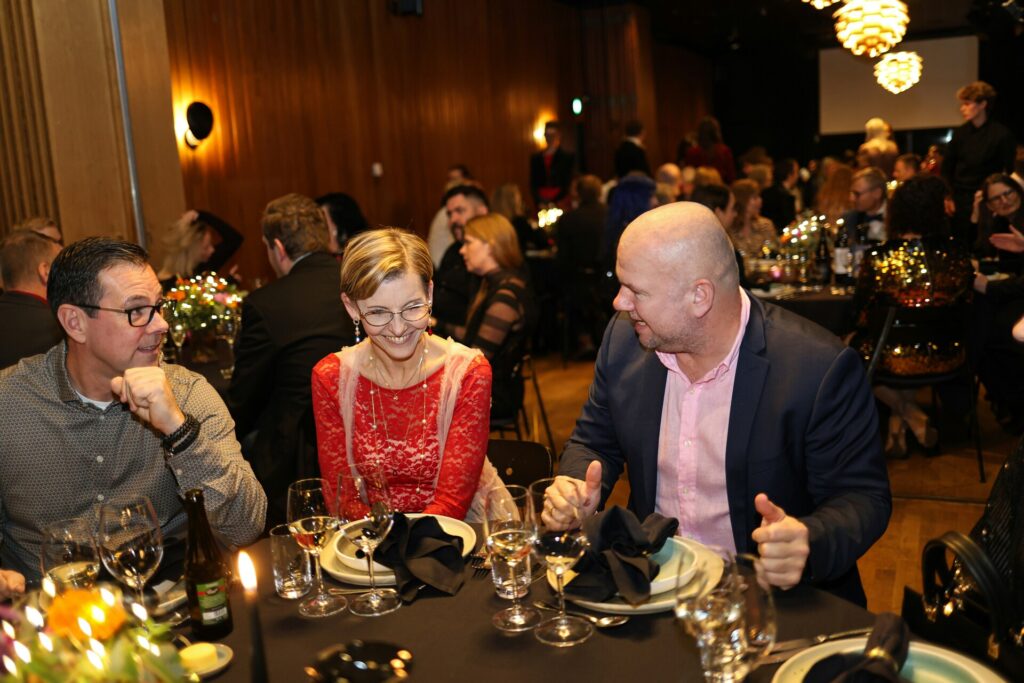

The next election will not save the republic. It will be kept, or lost, at our own dinner tables.
Most of us have been there.
The family dinner that starts warm and ends tense. The group text that turns sharp after one political post. The neighbor we used to wave to without thinking, now slightly avoided because of the yard sign. A child looking up and asking, with genuine confusion, why the adults seem so angry all the time.
These ordinary moments rarely make headlines. They do not trend. Yet they are where tribal politics does its real damage, and where the only meaningful repair can begin. We have spent years waiting for the right candidate, the right party, or the right election to deliver us. That hope is a distraction. No leader will restore what we have allowed to erode in our own daily speech and relationships. The fracture lives closer to home. So does the solution.
The Kitchen Table Test
Call it the Kitchen Table Test: Can you sit across from someone who votes differently, believes differently, or interprets the same set of facts differently, and still leave both the relationship and your own integrity intact? Can you argue without contempt? Listen without already loading the counterpunch? Admit uncertainty without feeling you have surrendered?
Most of us fail this test more often than we like to admit. The failure is not mainly intellectual. It is habitual. We have trained ourselves to treat political disagreement as evidence of bad character. Once that shift takes hold, conversation stops being a search for understanding and becomes a performance of loyalty. Winning the exchange matters more than knowing the person across the table.
The good news is that the habits capable of reversing this failure are specific, trainable, and available to anyone willing to practice them. They require no permission from Washington and no approval from any faction. They require only deliberate choice, repeated in ordinary moments.
Guarding Our Information Diet

Let’s start with our information diet. Most of us feed ourselves a steady stream of content that confirms what we already believe. That is human nature. However, intellectual discipline and honesty demand we subject the claims that flatter our side to the same scrutiny we apply to the ones that threaten it. When a story or post feels especially satisfying, when it delivers that little surge of righteous energy, slow down. Check the primary source. Ask whether the most inflammatory version is also the most accurate. Notice how often the satisfying version softens or collapses under closer inspection.
This single habit cuts the emotional fuel that tribal media depends on. It does not make us neutral. It makes us harder to manipulate. Over time, it also makes our conversations less reactive and more grounded, because we are no longer carrying borrowed outrage into every exchange.
Leading With Curiosity
Next, change the opening move in difficult conversations. Instead of launching into rebuttal the moment someone says something you dislike, lead with genuine curiosity. “Help me understand how you see that.” “What experiences shaped that view for you?” “What would have to be true for that to make sense?” These questions are not soft. They are strategic. They force both people out of performance mode and into actual exchange.
Most people, when treated as complex human beings rather than avatars of their political tribe, respond in kind. The few who refuse, who insist on treating every disagreement as a loyalty test, reveal themselves quickly enough that you can adjust without wasting further energy. The practice feels awkward at first, especially if you have spent years scoring points. Keep at it. Curiosity is a muscle. It strengthens with use.
Refusing to Let One Position Define a Person

A third practice is the deliberate refusal to let one position define an entire person. Your relative’s vote does not erase years of showing up for the family. Your neighbor’s yard sign does not cancel the times she brought food when someone was sick or watched your house while you were away.
Politics matters. It shapes policy, law, and the direction of the country. It is not everything. When we allow it to become everything, we shrink the space in which trust, cooperation, and ordinary kindness can survive. We can practice the mental separation out loud if necessary: “I disagree strongly with this position, and I still recognize this person as more than that position.”
The distinction feels small in the moment. Over months and years it becomes the difference between a brittle community and a resilient one. It is also the difference between raising children who see fellow citizens as potential enemies and raising children who see them as people with whom disagreement is possible.
Modeling the Standard for the Next Generation

Model the standard visibly for the next generation. Children notice tone faster than content. They hear the edge in our voice when we talk about “those people.” They watch whether we correct misinformation only when it comes from the other side. They register whether we treat political opponents as cartoon villains or as fellow citizens who happen to be wrong on important questions. They learn more from what we practice than from what we lecture.
If we want them to inherit a country still capable of self-government, we have to demonstrate that disagreement need not mean enmity. That demonstration happens in the car, at the table, and in the living room far more than in any formal civics lesson. Every time you refuse the cheap shot, every time you give the other side the most charitable plausible interpretation before criticizing it, you are teaching something lasting.
The Work That Keeps a Republic
These habits are unglamorous. They will not produce viral moments or large online followings. In a culture that rewards performance, certainty, and the public humiliation of opponents, quiet integrity can look like weakness or even betrayal of the cause. It is neither. It is the only foundation strong enough to support a diverse free society over time.
Every time you choose curiosity over contempt, verification over satisfaction, and the full person over the political caricature, you are doing the actual work of keeping the republic.
The founders understood this. They knew that constitutions and institutions are necessary but insufficient. Self-government ultimately rests on the character of the people who inhabit it. Character is formed less in grand public moments than in the small, unrecorded ones when no one is watching and the only audience is the people we claim to love.
The Choice Is Ours

The political saviors will keep coming. The tribal incentives will remain strong. The media environment will continue to reward the loudest and most certain voices. None of that changes the decisive choice still available to each of us: continue the cycle of contempt, or begin the slower, quieter work of rebuilding the habits that make self-government possible.
That choice does not require a majority. It does not require perfect consistency. It only requires the next conversation. The next dinner. The next moment when the easy, tribal response rises in our throat, and we decide, deliberately, to do something better.
The Kitchen Table Test is simple to state and hard to pass consistently. That is precisely why it matters. The next election will not save the republic. It will be kept, or lost, in the ordinary rooms where we decide how to treat one another when the stakes feel personal, and the cameras are off.
That decision is available today. It only requires you.


