
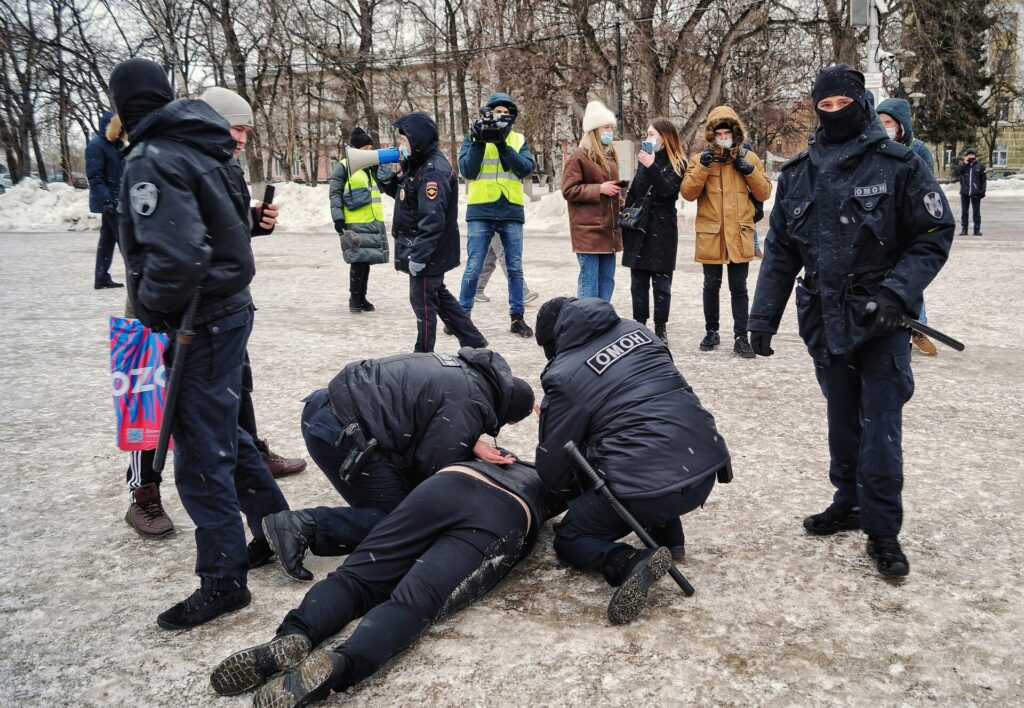

A serious country can enforce its borders and still answer for how that power is used.
When law-abiding neighbors who have done absolutely nothing wrong cannot leave their homes except in fear of false arrest and physical abuse, we have lost our way as a nation.
I wrote those words recently and paired them with Theodore Roosevelt’s plain warning: “This country will not be a permanently good place for any of us to live in unless we make it a reasonably good place for all of us to live in.” This is not a partisan complaint. It is a description of what happens when the government’s power begins to outrun the limits that have always defined American freedom.
Two Records That Both Deserve Attention
A serious country enforces its immigration laws. Borders are not suggestions. Removing people who have no legal right to remain, especially those with serious criminal records, is a basic duty of sovereignty. Recent efforts have produced real results in that direction: targeted removals of individuals convicted of violent crimes and sexual offenses, and public reports of corresponding declines in certain categories of crime. Those outcomes matter. They answer a legitimate public demand for order after years of uneven enforcement. Ignoring them is not moderation. It is denial.
Yet the same period has produced a parallel public record that cannot be dismissed. Civil liberties investigations, congressional inquiries, court filings, and on-the-ground reporting document patterns of excessive force, racial profiling, the detention and mistreatment of U.S. citizens and children, and a sharp rise in deaths inside immigration detention. These are not abstract talking points from one side of the aisle. They are concrete claims about how force is being used on American streets and inside American facilities. Looking away from them is also denial.
These Abuses Are Unacceptable

Let us be clear, with no softening and no evasion: these excesses and abuses are unacceptable in a country that prides itself on freedom.
They are not “regrettable byproducts.” They are not “the price of order.” They are violations of the principles this nation claims to embody. A free people do not tolerate agents who treat the simple act of watching and filming as grounds for chemical assault. A free people do not accept the shooting of American citizens on American streets under contested claims of self-defense while accountability lags. A free people do not shrug at rising deaths in custody, racial profiling, or the sweeping of U.S. citizen children into operations without clear individualized justification.
These practices are intolerable precisely because this is America, the country that has long insisted that power must answer to the Constitution, not the other way around.
The Record of Excess
In July 2026, the American Civil Liberties Union released Agents of Chaos and Cruelty, examining more than 1,200 immigration enforcement incidents across eight states. More than 400 involved documented misconduct. The report records hundreds of cases in which agents used physical force as a first resort, pushing, tackling, pinning people to the ground, and hundreds more involving chemical irritants, including direct deployments and tactics that restricted breathing.
Racial profiling appears again and again. U.S. citizens were among those detained, targeted, or subjected to force, including children who are themselves citizens. Operations reached sensitive places, including schools.
The details are not theoretical. Video from New York in late July 2026 shows a masked agent walking up to a woman filming an operation from a public sidewalk and spraying her with pepper spray at close range. She was not blocking an arrest. She was not interfering. She was recording. The First Amendment protects that. When agents treat the simple act of watching and filming as justification for chemical force, something fundamental has shifted, and that is unacceptable in a nation that calls itself free.
Fatal Encounters on American Streets
Worse still are the fatal uses of force against American citizens. In January 2026 in Minneapolis, an ICE agent shot and killed Renee Good, a 37-year-old mother of three and U.S. citizen, as she tried to drive away from an enforcement scene. Local officials, including the mayor and governor, have said available video does not support the agent’s claim of self-defense. At the same time, the Department of Homeland Security maintains Good tried to strike an officer with her vehicle. That dispute remains unresolved and is the subject of an ongoing investigation.
Seventeen days later, Alex Pretti, a 37-year-old intensive care nurse and U.S. citizen, was shot and killed by federal agents during a protest against ICE operations in the same city. Federal officials said Pretti approached agents with a handgun and resisted attempts to disarm him. Two witnesses who filed sworn statements in federal court said he never brandished a weapon, and the Minneapolis police chief later confirmed Pretti was a lawful gun owner with no criminal record beyond traffic violations.
Additional fatal shootings involving immigration agents occurred in Texas and Maine later that year. These were not remote border confrontations. They happened in American neighborhoods and involved American citizens. The delayed and incomplete public accountability has only deepened the unease.
A country that prides itself on freedom cannot treat the killing of its own citizens by federal agents as an administrative detail to be managed rather than a crisis of legitimacy to be answered. These deaths demand full, transparent investigation and consequences where warranted. Anything less is a betrayal of the standard we claim to uphold.
Deaths Behind Bars

Detention conditions form their own indictment. Deaths in ICE custody climbed to levels not seen in more than two decades. In 2025, the agency reported 33 deaths, the highest annual total since its creation. The cumulative toll under intensified enforcement has continued to rise into 2026.
Independent reviews and congressional investigations have pointed to inadequate medical care, delayed treatment, overcrowding, and conditions that fall short of basic human dignity. When detention expands rapidly while medical capacity and oversight lag, preventable suffering and death become predictable.
None of this requires believing that every enforcement action is abusive or that every person detained is blameless. It requires taking the public record seriously. A free society does not get to choose between recognizing legitimate enforcement successes and examining documented excesses. It must do both. When the excesses include the mistreatment of citizens, the use of force against non-threatening bystanders, and rising deaths in custody, those excesses are not merely unfortunate. They are unacceptable.
Constitutional Limits Are the Source of Strength
The Constitution contains no immigration exception. The Fourth Amendment protects the people against unreasonable searches and seizures. The Fifth and Fourteenth Amendments guarantee due process to any person within the jurisdiction of the United States. Equal protection principles constrain government action that relies on race or ethnicity rather than individualized suspicion.
These protections are not obstacles to effective law enforcement. They are the reason American law enforcement has historically carried greater moral authority than the security forces of less free nations.
When agents operate with faces covered, in unmarked vehicles, and with little visible identification, practical accountability shrinks. When force is used against people who pose no immediate threat, or against bystanders exercising the right to observe and record, the reasonableness standard is strained. When U.S. citizens and children are swept into operations without clear individualized justification, the line between targeted enforcement and generalized coercion begins to disappear. These are not left-wing or right-wing concerns. They are structural questions about how power is exercised in a free society.
America’s greatness has never rested on the government’s ability to act without restraint. It has rested on the disciplined capacity of government to act within limits that protect the governed. The same constitutional architecture that prevents tyranny also underwrites the legitimacy of the state when it does use force. Enforcement that respects those limits is more precise, more sustainable, and ultimately more effective. Enforcement that treats constitutional constraints as optional or inconvenient invites the backlash and distrust that make lasting order harder to achieve.
Law-abiding residents, citizens, legal permanent residents, and mixed-status families who have lived and worked in their communities for years should not have to calculate the risk of false arrest or physical confrontation just to go about ordinary life. When that calculation becomes necessary, the social fabric frays.
Cooperation with legitimate law enforcement declines. Trust erodes. The sense that certain neighborhoods or appearances are presumptively suspect takes root. None of this advances public safety. It substitutes fear for precision, and that substitution is intolerable in a country that claims freedom as its defining inheritance.
The Moderate Demand

A moderate position rejects both the claim that any criticism of ICE equals open-borders advocacy and the claim that vigorous enforcement must inevitably include the patterns of excess now on the public record. It insists that the government can remove serious offenders, control the border, and still operate under the same constitutional rules that apply to every other exercise of state power. It recognizes that record numbers of detentions and rapid operational expansion create conditions in which mistakes and abuses become more likely, and therefore demand greater, not lesser, oversight.
Accountability is not a luxury. Clear agent identification, routine body-camera use, independent review of force incidents, prompt and transparent reporting of deaths in custody, and strict adherence to warrant and individualized-suspicion requirements are ordinary expectations in a constitutional system. They do not prevent the removal of criminals. They prevent the slow corrosion of legitimacy that eventually undermines every other law-enforcement priority.
The Choice Before Us
Roosevelt’s insight remains exact. A country that becomes a good place only for some of its people does not remain a permanently good place for any of them. The constitutional principles that limit official power, due process, equal protection, protection against unreasonable force and seizure, are not progressive inventions or conservative talking points. They are the operating system of American freedom. They are what made this country capable of absorbing successive waves of newcomers while remaining a single political community. They are what continue to make ordered liberty possible.
Enforcement of immigration law is necessary. It is also not exempt from the standards that define us. When law-abiding neighbors begin to fear the agents of their own government more than the disorder those agents are meant to address, the problem is no longer solely about immigration. It is about whether we still believe the Constitution constrains power even when that power is exercised in a popular cause.
A nation that loses that belief does not become stronger. It becomes smaller than the country the Framers designed and that successive generations have struggled to keep.
What Freedom Requires of Us

We can enforce the law. We can protect the border. We can remove those who have no right to remain and who threaten public safety. We can do all of it while treating constitutional limits as non-negotiable.
The excesses and abuses documented in the public record, excessive force, racial profiling, the targeting of citizens and children, fatal encounters under disputed circumstances, and rising deaths in detention are unacceptable in a country that prides itself on freedom. They are not the cost of sovereignty. They are a failure of the discipline that sovereignty requires.
That is not a partisan demand. It is the moderate, American demand that government remain worthy of the authority it claims.