


Before we argue over taxes, borders, or the courts, we might sit with a simpler question. How does a candidate treat the people who cannot help them?
We are told that elections are about platforms, and platforms do matter. But they are also the part of politics most easily written by someone else. Staff can draft a tax plan, and advisers can fill a briefing book. What no aide can supply is whether the person seeking power still sees other human beings as fully human when it costs them something.
Trial attorneys learn to watch juries decide whom to trust before they decide whom to believe. Jurors listen to the story, yes, but they also watch the cheap moments: the aside, the glance, the way a witness treats the clerk. Politics is not a courtroom, but the human habit is the same. We measure a candidate’s decency, dignity, and respect for others long before we finish reading the policy memo. That measurement isn’t a decoration on the résumé. It’s the qualification that makes the rest of the résumé mean anything.
Niceness Is Not the Test
A candidate can be charming with donors and cruel to the intern. Manners in the receiving line are not the same thing as dignity. Dignity is what we grant people who cannot punish us for withholding it: the junior staffer, the waiter, the reporter who asks the unwelcome question, the opponent who just lost.
We do not need a laboratory for this. In our own lives, we can tell a decent boss from a cruel one. We watch who gets courtesy when courtesy is free, and who gets it only when a camera is on.
Voters seem to know it even when campaigns pretend otherwise. Research using decades of American National Election Studies data, backed by a follow-on experiment, found that warmth (whether a candidate seemed decent, trustworthy, and human toward others) outperformed competence, leadership, and even integrity in predicting overall evaluations and vote choice.
That is not sentimentality. It is a first-pass judgment about threat. If someone won’t grant ordinary respect, we aren’t foolish to wonder what they’ll do once the cameras are off, and the incentives run the other way. Younger voters put it without the jargon. In a 2024 survey of Americans 18 to 34 from American University’s Sine Institute of Policy and Politics, integrity and authenticity topped the list of desired traits in a leader, with inclusivity and compassion close behind.
None of this makes policy optional. A decent person with ruinous ideas can still harm. The reverse bet is shakier still: that someone who treats people as instruments will suddenly treat citizens as ends in themselves because a speechwriter told them to.
History Already Ran the Experiment
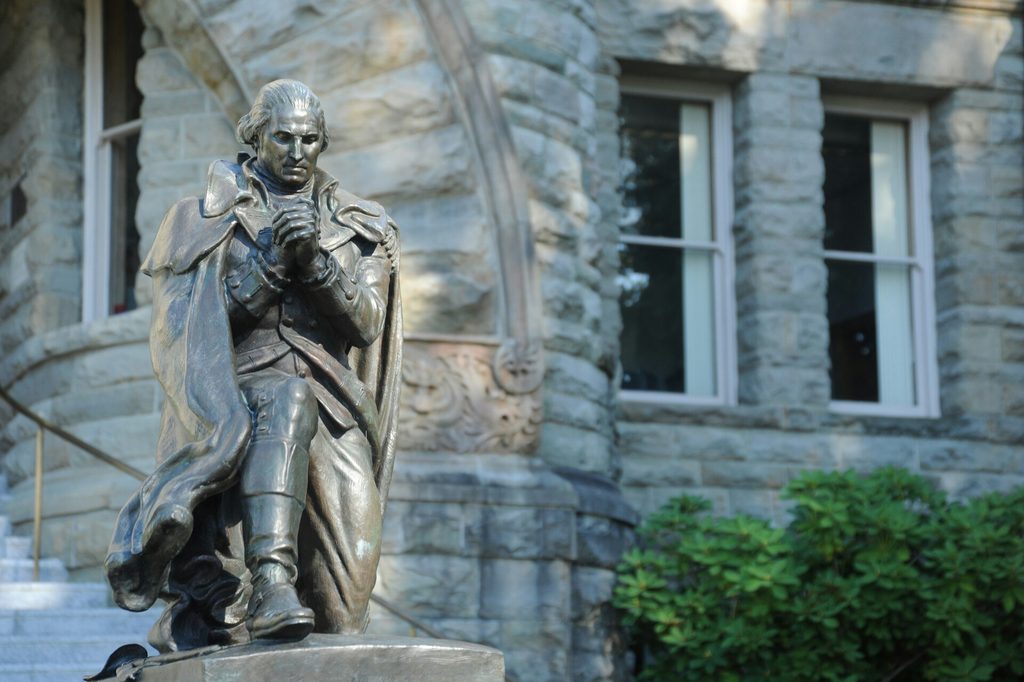
The American founding is remembered for parchment. It should also be remembered for a refusal.
George Washington resigned his commission rather than keep a victorious army as a personal instrument. King George III is said to have remarked that if Washington did that, he would be the greatest man in the world. The image is not theater. It is a man declining to treat fellow citizens as subjects.
Abraham Lincoln prosecuted a war. After four years of slaughter, he closed his second inaugural with “malice toward none, with charity for all.” That was not softness. It was a judgment that a republic cannot be rebuilt on contempt.
Frederick Douglass, who had every reason to distrust white American patriotism, left a meeting with Lincoln calling him an honest man. The nickname traces back to much smaller moments too. According to a story that has circulated since his days as a store clerk, he once took a few cents too much from a customer and walked miles that same night to return it, long before anyone thought to call him president.
Nelson Mandela spent twenty-seven years in prison and then walked into a stadium wearing a Springbok jersey, a symbol of the old order, and treated a country that had caged him as if it could still be one country. He invited several of his former prison warders to his inauguration. Christo Brand, one of those warders, became a close friend during Mandela’s years on Robben Island, and later recalled Mandela introducing him to a room of officials, saying, “This man was his warder, and this man was his friend.” South Africa’s transition was incomplete and painful. It was not a civil war either. Character was part of why.
These were not saints. Washington enslaved people. Lincoln’s racial views were of his century. Mandela sanctioned armed struggle. Decency is not purity. It’s the narrower, more useful capacity to recognize the dignity of the other side and still use power without burning the house down.
We do not have to go back two centuries to see the test at work. In 2008, at a Minnesota town hall, a supporter told John McCain she could not trust Barack Obama because he was “an Arab.” McCain shook his head, took the microphone, and said no. Obama was a decent family man and a citizen, he said, and they simply had disagreements. McCain was losing the race at the time. Correcting his own crowd did not help him win. It told the country he still believed an opponent was a fellow citizen. That is the dignity test in a single minute of tape.
Contempt Is Not a Style. It Is a Method.
We sometimes talk as if cruel language were merely color, a bit of heat for the base. But dehumanizing language is a permission structure. When leaders describe opponents as vermin, traitors, or a disease, violence becomes easier to justify, and institutions become easier to treat as obstacles.
The pattern appears in the worst chapters of the twentieth century, and in smaller corrosions closer to home: loyalty tests, offices packed with flatterers, critics recast as enemies of the people. Research on so-called dark personality traits in politics finds that the public at large tends to dislike candidates high in callousness and manipulation, and that those traits, when they do win, tend to produce more unethical conduct and less cooperative governing.
Character leaks. It leaks in the nickname, in the joke told when the principal thinks the room is friendly, in the way a person speaks about staff who aren’t present. People who work around politicians notice what shows up when no one’s watching closely: the prepared line is a performance, and the cheap moment is the tell.
If a leader cannot grant an opponent basic dignity, there’s little reason to expect they’ll grant it to a civil servant, a judge, a local official, or a citizen who voted the other way. An administration’s culture tends to follow the temperament at the top.
The Honest Case for Looking Past Character
Here is the objection most of us have used, or at least heard. We don’t have to like them. We just need them to deliver.
Take that seriously. Not everyone who feels this way is being cynical. Many are afraid. When we believe the next Supreme Court seat, the next war, or the next piece of legislation is existentially urgent, character can feel like a luxury, something to worry about after the emergency has passed. A legislature can pass a bill even if the sponsor is a scoundrel. We have all watched it happen.
But fear does not make the rest of government disappear. Delivery still requires other people: allies, opponents, bureaucrats, courts, foreign counterparts. People work more readily with leaders they don’t fear will humiliate them the moment they stop being useful. Governing, at its core, is a cooperative act, and leaders who treat every relationship as disposable tend to find that cooperation dries up right when they need it most.
A second cost may be the one that should worry us most if we still want a country that can talk to itself. When we treat character as optional so long as the policy is right, we send a message that behavior is negotiable whenever the votes line up. That message does not stay in one party. It licenses the same contempt on the other side. The result is not harder-nosed politics. It’s a dumber one, where every disagreement becomes a morality play, and every opponent becomes a villain.
We will fight over immigration, taxes, and judges. The real question is whether we can still insist that the person holding office treat fellow citizens as fellow citizens. That is not naïveté. It is the minimum condition for a country that has to live with itself after the election.
A Pocket Version of the Test
None of this requires a laboratory. It requires a habit of attention.
- Can they describe an opponent’s position without a sneer?
- Can they lose a point without inventing a conspiracy?
- How do they talk about the people who work for them when those people aren’t in the room?
- Do they apologize for a real wrong, or only for “how it landed”?
- Does their humor punch down?
Authenticity is not the same as decency. A person can be authentically cruel. What matters is congruence: whether the private manner matches the public sermon about dignity. Campaigns are theater. Governing is repetition. The value system that survives repetition is the one that counts.
Competence still matters. Experience still matters. A platform still matters. None of those survive a leader who has decided that some of their fellow human beings don’t deserve ordinary respect. That decision, once made, works its way through appointments, rhetoric, enforcement, and the example set for millions of people who take their cues from the top.
The founders built checks because they did not trust anyone with unchecked power. We have our own check. The platform tells us what a candidate wants to do. The dignity test tells us what they’re likely to become.