


Genesis 9:6 is one of the most frequently cited verses in debates over capital punishment: “Whoever sheds the blood of man, by man shall his blood be shed, for God made man in his own image.” On its face, it sounds like a clear divine mandate, and the traditional reading carries real force among the thoughtful people who have held it for centuries. But recent events show how easily we can stretch the verse into something the text never says, and how costly that stretch becomes when we treat it as a policy blueprint.
A Pastor, a Firing Squad, and a Livestream
On October 9, Robert Jeffress, senior pastor of First Baptist Dallas, backed the Pentagon’s plan to livestream the firing-squad execution of Nidal Hasan, the Fort Hood shooter, which the Army has scheduled for December 3. Citing Genesis 9:6, Jeffress wrote that capital punishment is “commanded by God” to remind people of the sanctity of human life, and that “the more people that can see that truth illustrated through a public execution, the better.”
In effect, he treats a livestreamed firing squad as a necessary object lesson whose value grows with its audience.
The plan is not final. President Trump said on October 9 that he “absolutely” approved of the livestream, then said the next day that he would decide himself, after criticism from Republicans and Democrats. Whatever happens, Jeffress’s argument deserves a careful look, because it asks Genesis 9:6 to carry far more than the text supports.
What Genesis 9:6 Actually Says
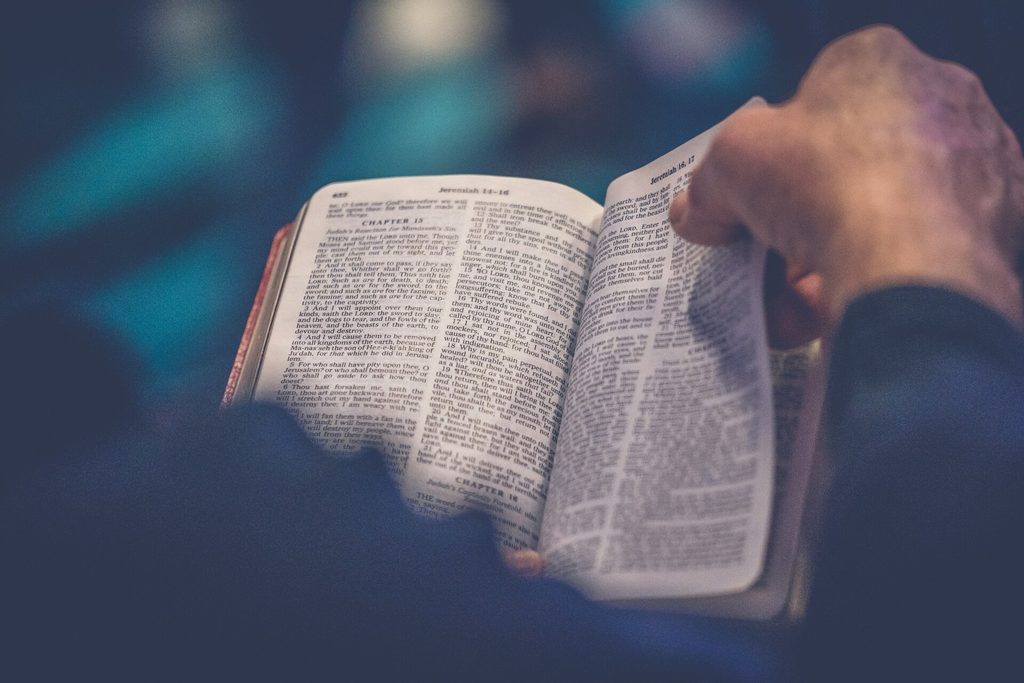
Let’s start with the surrounding verses. Genesis 9:5 says God will require an accounting for human blood, from animals and humans alike. The immediate context stresses the gravity of taking a life made in God’s image and presents that accounting as God’s prerogative.
Some scholars also read the Hebrew preposition in verse 6 as “for” or “in exchange for” rather than “by,” shifting the emphasis from a command to human courts to a principle of accountability, though many interpreters, including classical rabbinic commentators, read it as authorizing human justice.
Even under the traditional translation, the statement works more as a declaration of the value of human life than as a permanent legal code, and nothing in it contemplates livestreaming a firing squad so that the largest possible audience can watch.
A Covenant Principle, Not a Legal Code
Genesis 9:6 also sits inside a covenant renewal after the flood, not inside the detailed Mosaic legislation that later governed Israel. That later law distinguished murder from manslaughter, required two or three witnesses, and set aside cities of refuge. The principle that murder is uniquely serious survived, but the precise machinery did not remain fixed. Treating the idea that a wider audience makes the lesson better as the logical conclusion of Genesis 9:6 turns a covenant principle into a rationale for broadcasting an execution, a leap the text does not make.
The Strongest Biblical Objection: Public Deterrence

Still, the question is not closed, because other parts of the Mosaic law do attach a public, deterrent purpose to punishment. Deuteronomy 19:20 says the rest of the people will hear and be afraid, and Pastor Josh Howerton has noted that the Bible’s executions were public. But that argument raises a question the other side has to answer. If the public character of those executions binds us today, then so does the framework they belonged to.
Why We Are Not an Old Testament Society
That framework does not bind us, and the New Testament helps explain why. It does not repeal the state’s authority to punish wrongdoing, since Romans 13 still recognizes that governing authorities bear the sword, but it also stops short of reenacting the Mosaic criminal code or turning ancient covenant language into a script for modern public executions.
Most Christian traditions hold that Christians live under the New Covenant, and civil and military authorities in the United States operate under a Constitution, statutes, and procedures shaped by centuries of legal development, not under the theocratic framework of ancient Israel.
We do not stone people for Sabbath violations or reinstate the full apparatus of ancient Israelite criminal procedure, so importing selected Old Testament phrases as binding mandates requires an interpretive method that very few of us apply across the whole Mosaic law. Following the Old Testament literally only when it supports a livestreamed firing squad is not faithfulness. It is convenience.
The Problem With Public Spectacle

Even setting the theology aside, the practical costs are easy to foresee. History suggests that public executions tend to become spectacles that invite voyeurism and tribal satisfaction at least as readily as sober reflection on the sanctity of life, and no state has held one in this country since Kentucky did so in 1936. Once the content exists, it will not stay neatly contained within an adult audience seeking moral instruction. Children and teenagers are likely to encounter clips, screenshots, and commentary, whether intentionally, accidentally, or by algorithm.
What a Broadcast Would Teach Us
Exposing young people to the deliberate, state-sanctioned killing of a human being as a lesson risks coarsening the culture they are forming, and it risks teaching that justice requires a public audience and that wider distribution improves even the most extreme violence. That would be the opposite of teaching the unique value of human life.
Some of those most directly harmed share that concern: Alonzo Lunsford, who survived seven gunshot wounds at Fort Hood and plans to attend the execution, opposes livestreaming it. A society that claims to take the image of God seriously does not improve its moral instruction by ensuring more children can watch a man die by firing squad.
This Is Not a Simple Left-Right Argument
Thoughtful people disagree about this, and the dispute does not break neatly along party or denominational lines. Franklin Graham has asked whether many of those appalled by the livestream are comfortable with the violence Hollywood sells as entertainment, and whether we have become desensitized to death. Those questions deserve an honest answer from critics as well as supporters.
Opponents include the U.S. Conference of Catholic Bishops, Republican Sens. Thom Tillis and John Curtis, and Texas legislator Jeff Leach, who backs a firing squad for Hasan but said bloodlust isn’t biblical, while Rep. Andy Ogles has supported the plan.
President Trump has suggested that showing the execution might lead others to think twice, but a 2012 National Research Council review found that existing research does not show whether the death penalty raises, lowers, or has no effect on homicide rates.
What Genesis 9:6 Does and Does Not Require

With deterrence unable to settle the question, we are left weighing the alternatives. Life without parole achieves permanent incapacitation without the risk of an irreversible error, and in a society with the institutional capacity to secure dangerous offenders, the case that public death is the only biblically faithful option is far weaker than the verse alone suggests.
Hasan’s guilt is not in doubt, since he admitted the killings at his 2013 trial, so the argument against a broadcast rests on what a public spectacle asks of us, not on fears of a wrongful conviction.
Reasonable people of good faith will continue to disagree about capital punishment, and the traditional reading of Genesis 9:6 deserves respect. But the verse does not, by itself, require modern governments to impose the death penalty, nor does it authorize turning an execution into a livestreamed object lesson whose reach is likely to include our children.
Taking human life seriously does not require us to pretend we still live under the statutes of an ancient covenant people, or that a firing squad broadcast is what those statutes demand.