

Imagine it’s a quiet Tuesday morning in 2034. Your mother, 78 years old, opens an official envelope at the kitchen table. Her Social Security check, the one she relied on after 40 years of payroll deductions, has been cut by more than 20%. Medicare’s hospital fund ran out the year before. Doctors are rationing care, and hospitals are quietly turning away non-emergency seniors.
The national debt has exceeded $38.8 trillion, increasing by about $7.2 billion per day. Interest payments alone consume more federal revenue than the entire defense budget. Many adults hesitate to start families because the future feels too uncertain. In Washington, lawmakers are once again stuck in gridlock, trading blame as the crisis worsens and the road ahead crumbles further.
This isn’t a dystopian novel. It’s the direction we’re heading in 2026, unless the reasonable majority finally chooses to stand up.
The figures are clear. Social Security’s trust fund is expected to run out around 2033, after which scheduled benefits could decrease to about 77 cents on the dollar without reform. Medicare’s Hospital Insurance trust faces similar issues, with the 2025 trustees’ report predicting that its insolvency date has been moved up by 3 years from previous estimates.
According to a September 2025 Pew Research Center survey, only 17% of Americans trust Washington to do what’s right most of the time. Meanwhile, a record 45% now identify as political independents, based on Gallup’s 2025 annual survey, most of whom are tired of the ongoing tribal warfare between the two major parties.
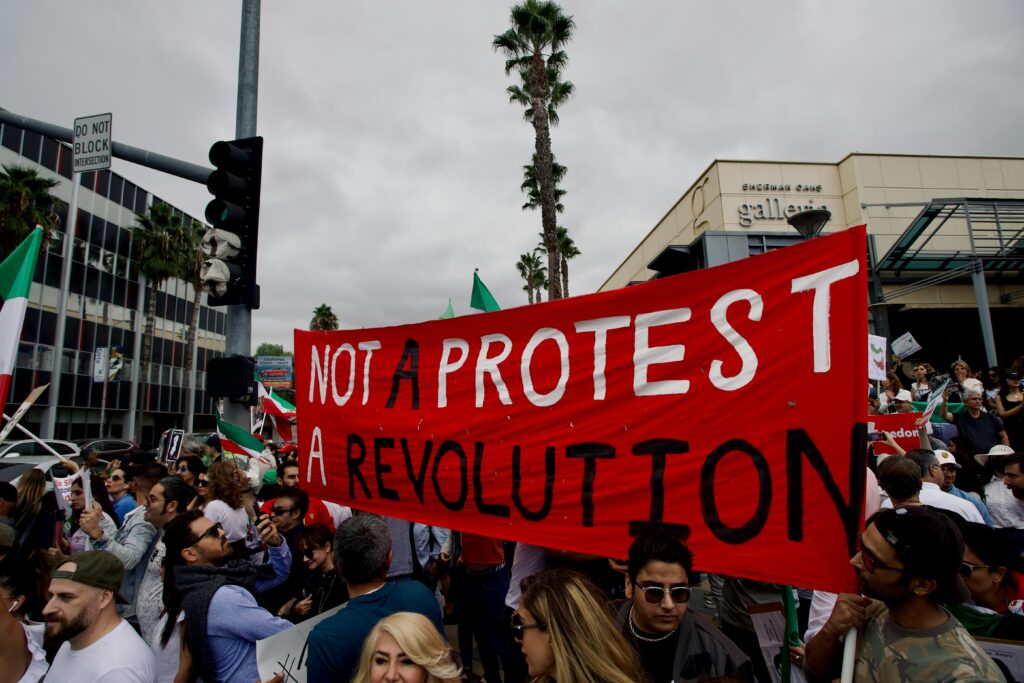
Dysfunction is no longer just annoying; it is stealing our future. The only realistic way forward isn’t louder voices from the extremes. It’s a moderate revolution: a calm, determined uprising by pragmatists against the paralysis threatening everything we’ve built.
The Slow-Motion Crisis
We already feel it. Every time Congress turns a routine spending bill into a hostage situation. Every time, a continuing resolution buys a few more weeks of fake stability. Every time outrage is rewarded with clicks and donations while real solutions are ignored, we lose more ground.
The extremes have taken over the microphones. One side behaves as if endless spending can challenge basic demographics and math indefinitely. The other promises severe cuts that never hold up against political realities. Both treat governance like a team sport where gaining points is more important than delivering results, and neither side is building anything truly worth maintaining.
The human cost is tangible and personal. Young workers contribute to retirement systems that, if not fixed, will not be solvent when they retire. Middle-class families see infrastructure projects take decades while costs soar. Small business owners deal with a complex regulatory environment that makes compliance a full-time job. Seniors live with quiet anxiety, worried the safety net they’ve earned might fall apart at the worst possible time.
This isn’t just an abstract policy debate. It’s about our parents’ retirement security, our children’s economic opportunities, and whether America remains a place where hard work still pays.
The Sleeping Giant: The Reasonable Majority

Here is what the loudest voices don’t want us to see: most Americans are not extremists.
Gallup data shows roughly a third of us identify as moderate, and with independents at a record 45%, the pragmatic center is larger than either partisan base. We want Social Security and Medicare protected as earned promises, not dismantled or endlessly expanded without paying for them.
We want secure borders combined with legal immigration that benefits our economy. We want schools that teach our kids to think critically and compete, not ideological battlegrounds that change with each election. We want a government that solves problems rather than just performing for the cameras.
The moderate majority has also been disappointed by its own patience. We expect reason to prevail eventually, for adults to intervene, and for someone else to fix the problem. That expectation has cost us decades of inaction on issues that worsen every year. The moderate revolution is about waking that majority up, not with pitchforks, but with steady, principled pressure applied without apology.
What a Moderate Revolution Looks Like
It looks like rejecting purity tests in favor of practical trade-offs. It treats government dysfunction as an engineering problem rather than a holy war.
Regarding entitlements, the math is not complicated. We have more retirees collecting benefits, fewer workers contributing, and people living much longer than the system was built to handle. Ignoring that reality isn’t compassion. It’s negligence disguised as kindness.
A responsible approach gradually increases the full retirement age over many years, while safeguarding those in physically demanding jobs from an unfair burden of the change.
It introduces gradual benefit adjustments so higher earners pay a little more without harming the middle class. It expands the payroll tax base through small, shared contributions from employees and employers, which is much less disruptive than waiting for automatic cuts. It also reforms Medicare toward value-based care that reduces costs without sacrificing quality.
None of this is uncharted territory. The bipartisan commission in 1983 saved Social Security during President Reagan’s and House Speaker Tip O’Neill’s tenure. Adults negotiated honestly, made fair trade-offs, and resolved the issue for a generation—no victory parade necessary—just results. We can do it again if we demand leaders who act responsibly.
The same approach applies elsewhere. Ranked-choice voting provides voters with more meaningful options. Regulatory sunsets require lawmakers to justify rules rather than allowing outdated mandates to accumulate. Immigration reform that secures the border while expanding the legal workforce addresses both humanitarian and economic issues. Honest long-term budget planning ends the annual brinkmanship that unsettles markets every fall.
No more performative outrage. Just tangible, phased progress that rebuilds trust through results.
It Has Worked Before. Recently.

Cynics claim that cooperation is impossible in today’s climate. The record shows otherwise.
In 2021, a divided Congress passed the Bipartisan Infrastructure Law, a $1.2 trillion investment in roads, bridges, broadband, and water systems that received support from 19 Republican senators and 13 House Republicans, as well as Democrats. It was the largest infrastructure investment in American history, and it occurred because enough lawmakers on both sides decided that the country’s deteriorating roads and bridges mattered more than scoring political points.
In 2022, Congress passed the Bipartisan Safer Communities Act, the first major federal gun law in nearly thirty years. Republican and Democratic senators, including John Cornyn of Texas and Chris Murphy of Connecticut, sat across from each other, negotiated honestly, and created a bill that addressed mental health, school safety, and background checks without either side getting everything it wanted. It passed the Senate 65-33. It became law. Problems were addressed.
That same year, the CHIPS and Science Act passed with broad bipartisan support, allocating over $52 billion to rebuild American semiconductor manufacturing and counter China’s rising technological influence. It was one of the rare moments when both parties agreed that national competitiveness and economic security mattered more than partisan interests.
None of these was a perfect bill. None of them satisfied the loudest voices on either side. That is exactly the point. Moderation means not getting everything you want.
It means getting things done, advancing the country’s interests, and compromising. This is how a functioning democracy works, and when we demand it loudly enough, it still can.
Why This Revolution Can Succeed
History shows pragmatic majorities win when the stakes are personal. The founders didn’t revolt out of anger; they arrived with clear demands for effective self-governance. Post-war America built the interstate highway system, landed on the moon, and created the largest middle class in history because leaders prioritized competence over ideology. That ability still exists within us; it has just been silenced.
Today, the fuel is exhaustion. We are tired of feeling like spectators in our own country’s decline. Tired of politicians who campaign against the system and then spend careers deepening it. Tired of watching the next generation inherit heavier debts and fewer opportunities. When that exhaustion shifts from apathy to active demand, it becomes one of the most powerful forces in democratic life.
A moderate revolution doesn’t require mass protests or viral moments, although those can help.
It requires millions of reasonable voices consistently choosing candidates who reject extremes. It requires holding officials accountable for results rather than rhetoric, and showing up to ask “How do we fix this?” instead of “Whose fault is it?”
It begins with small actions: sharing ideas like this one, refusing to let the loudest voices define the options, and selecting leaders who prioritize results over re-election.
The Choice Before Us
One path continues on its current trajectory: increasing polarization, automatic cuts or tax shocks during crises, slower growth, deteriorating infrastructure, and a diminishing sense of shared American opportunity. Down that route, the scenario at the start of this post isn’t fiction. It’s a forecast.
The other path is the moderate revolution: reclaiming governance for the pragmatic center, honoring promises to seniors while securing opportunities for youth, and emphasizing that results matter more than tribal point-scoring. On this route, today’s problems are tough but solvable. Just as they always have been.
The clock keeps ticking. Debt keeps growing, trust keeps falling, and opportunities to solve problems keep shrinking. But it’s not too late.
It’s time to fix the dysfunction in our government. It’s time for the moderate revolution to begin.
It’s time to rebel. It’s time to demand change. It’s time to take back our future.
America doesn’t have to decline. We can rise if enough of us decide that reasonable, determined action outweighs endless dysfunction. The reasonable majority has been silent long enough. It’s time to speak, and, more importantly, to act.
Now.