
In November 2015, during a campaign rally in Myrtle Beach, South Carolina, then-candidate Donald Trump appeared to mock New York Times reporter Serge Kovaleski, who has arthrogryposis, a congenital condition that limits joint movement. Trump flailed his arms and contorted his right hand while imitating the reporter and disputing his past article on celebrations after the 9/11 attacks.
“Now the poor guy, you gotta see this guy,” Trump said, drawing laughs from the crowd. Trump later denied mocking the reporter’s disability, claiming he was simply imitating a “flustered reporter.” However, video footage showed the imitation closely mirrored how Kovaleski’s hand rests. The incident drew widespread condemnation from disability advocates, journalists, and members of both parties.
That moment, more than a decade ago, marked the beginning of a profound shift in American public discourse. It wasn’t just an awkward campaign moment. It began a period of normalizing cruelty at the highest levels of leadership.
Over the decade from 2016 to 2026, American decency, built on values like empathy, respect, and civic civility, has significantly eroded. Psychological research confirms that communities and entire nations tend to adopt the behavioral norms modeled by their leaders, which can amplify traits such as aggression, division, and disregard for boundaries.
Trump’s influence has left a noticeable mark: an increase in hate incidents, a decline in public civility, and a roughening of the national conversation.
The Spark: Trump’s 2015 Mockery and the 2016 Election
The Kovaleski incident wasn’t Trump’s first controversy, but it exemplified a recurring pattern: using ridicule to discredit opponents without regard for human dignity.
Public outrage erupted after the Myrtle Beach rally, with disability advocates nationwide condemning what they perceived as ableism. Many Trump supporters dismissed it as “straight talk.” That reaction set an early tone: empathy was secondary to winning.
The 2016 election intensified this trend. Trump’s campaign rhetoric, including promises to build a border wall (that Mexico would pay for ) and calls to temporarily ban Muslim immigration, coincided with an increase in reported hate incidents. According to the Southern Poverty Law Center, nearly 867 harassment cases were documented in the 10 days after his election victory, with many perpetrators citing Trump’s name.
FBI data confirmed that reported hate crimes increased by 17% in 2017, marking the largest single-year increase since the spike following the September 11, 2001, attacks. A 2019 study published by researchers from the University of North Texas found a significant connection between counties that hosted Trump’s 2016 campaign rallies and higher rates of reported hate incidents, compared to demographically similar counties that did not host rallies.
However, the researchers noted they could not definitively establish cause and effect.
As a leader, Trump’s divisive language seemed to encourage similar behavior across the country, a pattern in line with psychological research showing that perceived group threats can amplify aggressive and exclusionary actions within a population.
Escalation During the First Trump Presidency
Trump’s first term formalized many of these patterns. Policies like family separations at the border treated migrants as threats rather than as people fleeing desperate circumstances. Thousands of children were held in federal facilities, a policy justified as a deterrent but condemned across the political spectrum as needless cruelty.
The 2017 Unite the Right rally in Charlottesville, Virginia, where white nationalists chanted “Jews will not replace us,” drew one of the most scrutinized responses of Trump’s presidency. In the days after the violence, during which counterprotester Heather Heyer was killed, Trump said there were “very fine people on both sides.” In the same statement, he explicitly said he was not referring to neo-Nazis or white nationalists and called for them to be “condemned totally.”
Critics argued that the wider framing still left a moral ambiguity that was completely inadequate given the circumstances, while supporters said his condemnation was clear. What is not in dispute is that the statement sparked strong backlash from members of both parties, including Republican House Speaker Paul Ryan, who said Trump “messed up.”
Incidents targeting Asian communities surged during the COVID-19 pandemic, especially after Trump’s repeated use of terms like “China virus” and “Chinese virus.”
Research published in peer-reviewed journals found a measurable link between Trump’s first use of the term in March 2020 and a documented spike in anti-Asian hate incidents in the days afterward. Hate crimes against Asian Americans increased by 73% in 2020 compared to 2019, according to FBI data analyzed by the Center for the Study of Hate and Extremism.
Trump’s attacks on the mainstream media as “enemies of the people” also undermined institutional trust and helped create an environment where competing narratives replaced shared facts.
Psychologically, this reflects documented patterns of how leaders influence group norms. Research from multiple countries indicates that perceived threats between groups often boost support for dominant, aggressive leadership, which then promotes and justifies exclusionary behavior. Surveys conducted during this period revealed increasing polarization and reported declines in civic compassion among Americans.
Post-Presidency and the 2024 Campaign
After leaving office, Trump’s influence on public life persisted. The January 6, 2021, attack on the U.S. Capitol, driven in part by his repeated and unfounded claims that the 2020 election was stolen, led to widespread violence that shocked the nation.
Supporters stormed the building, resulting in deaths, injuries, and the disruption of the certification of electoral votes. Trump’s description of the rioters as “patriots” deepened existing divisions, and polls taken afterward showed declining confidence in democratic institutions.
The 2024 campaign revived familiar tactics: mocking opponents’ appearances, amplifying conspiracy theories, and promising retribution against political enemies. Cultural surveys during this period showed a widespread feeling that national civility continued to decline, in line with trends seen throughout the Trump era.
Research on leader-follower dynamics shows that charismatic yet authoritarian leadership styles often lead to loyal followers who mimic the leader’s confrontational behavior. This pattern is evident in both political and cultural spheres during this time period.
The Second Term: 2025 and Beyond
In Trump’s second term, a series of executive orders has accelerated many of the trends mentioned earlier. Orders focused on immigration have increased deportations and aimed to revoke birthright citizenship, echoing earlier family separation policies but on a larger scale.
Policies dismantling diversity, equity, and inclusion programs in federal agencies have labeled equity efforts as “reverse discrimination.” Meanwhile, a separate executive order on “gender ideology” removed transgender recognition from federal documents, which critics described as an erasure of basic dignity for a vulnerable group.
Policies addressing homelessness have focused more on enforcement and civil commitment rather than compassionate, evidence-based interventions. New law enforcement directives have provided greater indemnification for officers and established pathways for prosecuting local officials suspected of obstructing federal immigration enforcement.
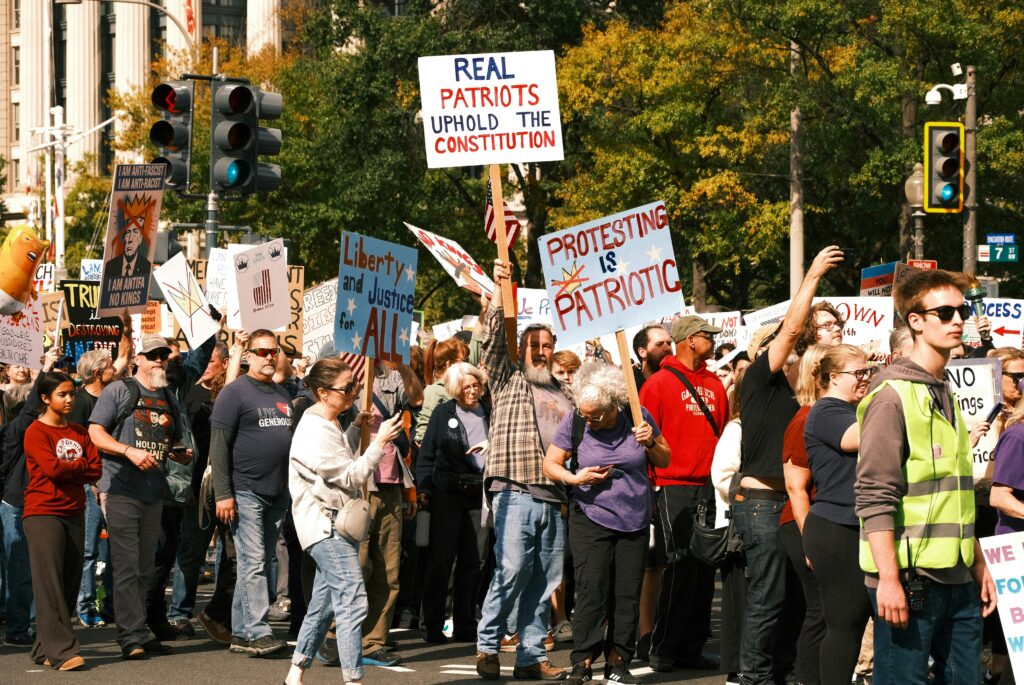
These actions have deepened polarization, ignited protests in cities across the country, and led to an increase in reported harassment incidents. This broader pattern of leadership, which consistently displays contempt for political opponents and vulnerable communities, continues to profoundly influence the national culture.
The Nation Reflects the Leader
Why does this pattern continue? Psychological research shows that leaders significantly shape the behavioral norms of their followers, especially during times of perceived social threat.
Trump’s consistent focus on dominance, zero-sum competition, and “us versus them” framing has fostered a national climate of suspicion and hostility, evident in hate crime data, in surveys of civic trust, and in the everyday experiences of communities across the country.
Historical patterns reflect this. Countries that tolerate cruelty from their leaders often see a wider decline in moral standards, as loyalty to the leader replaces other values.
America is not immune to this trend.
A Call to Reclaim What We’ve Lost
The decline in decency over the past decade is not a permanent trait ingrained in who we are as a nation. It results from leadership choices, which can change. From the 2015 mockery of a disabled journalist to policies in 2026 that strip basic recognition from vulnerable communities, the cumulative effect on our national character has been significant and lasting. However, research also shows that positive, inclusive leadership can repair what divisive leadership has damaged.
Societies have overcome worse.
We are the descendants of people who crossed oceans, built something from nothing, and sacrificed for the belief that every person deserves dignity.
We have not lost this inheritance; we have merely set it aside.
The work of reclaiming it begins within our communities, through our choices about who we lift, what we accept, and in our refusal to view cruelty as strength.
The values of empathy, honesty, and mutual respect are not soft. They are the foundation of everything durable we have ever built as a nation. Let us be courageous enough to defend them, regardless of who or what stands against us.
What remains?
Our assignment.
The assignment to revive and restore decency and human dignity to the center of our national life.
The responsibility to do this work belongs to all of us.
Let us accept the assignment.
Let’s get to work.
Now.