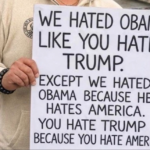


In an era when every headline screams crisis and every social media feed amplifies outrage, America is trapped in a self-reinforcing cycle of tribalism. Political discourse has devolved into slogans over substance, with the extremes on both sides dominating the conversation while the vast moderate majority watches in frustration and exhaustion.
Government dysfunction has become the norm rather than the exception. According to Gallup’s February 2026 poll, 29% of Americans cited government dysfunction and poor leadership as the nation’s single most important problem, ranking it above immigration, the economy, and inflation.
Trust in institutions is at a historic low, and polarization has deepened dramatically over recent decades, accelerating especially since the 1990s.
Yet beneath the noise lies a quiet truth: most Americans are not extremists. They are pragmatic, solution-oriented people who want effective governance, not perpetual combat. The path forward demands a moderate revolution, a deliberate, nonviolent uprising of the reasonable center to insist that practical solutions replace performative rhetoric and that government function again for the people.
The Cost of Tribalism
Tribalism thrives when identity overrides ideas. We sort ourselves into ideological camps, where loyalty to our side matters more than evidence or outcomes.
This dynamic has produced legislative gridlock, repeated shutdowns, and policy whiplash that undermines long-term planning. Infrastructure decays, entitlement programs face solvency crises, borders strain under unmanaged flows, and innovation in critical sectors such as energy and healthcare is stifled by partisan litmus tests.
The human toll is real. Families worry about affordability while politicians trade barbs. Young people inherit a system they view as broken, and many express deep dissatisfaction with how democracy functions. Local communities are often more resilient than the national picture suggests, but dysfunction at the federal level seeps downward, eroding social cohesion and public trust.
The moderate majority, holding pragmatic views and numerical power, has ceded the megaphone to louder voices. Independents and moderates swing elections, yet they rarely demand accountability between election cycles. This silence enables the extremes to set the agenda, forcing candidates to cater to primary voters who reward purity over pragmatism.
What the Moderate Majority Wants

The moderate majority is not apathetic. It is exhausted. Most Americans favor practical approaches: secure borders paired with humane immigration reform; fiscal responsibility paired with targeted investments in infrastructure and workforce development; innovation-driven solutions to climate and energy challenges rather than top-down mandates or outright denialism.
Polling consistently shows broad support for ideas such as encouraging skilled immigration, improving veterans’ care, and streamlining regulations that hinder the housing supply, areas where bipartisan bills have occasionally succeeded despite the noise.
Slogans undermine governance. “Defund the police,” “Build the wall,” and culture-war absolutes generate clicks and donations but do not solve problems. Reasonable solutions require nuance: reforming policing for accountability while maintaining public safety; enforcing immigration laws effectively while preserving legal pathways; and pursuing energy abundance through all viable sources, including nuclear and advanced renewables, to achieve both security and affordability.
What the moderate majority wants is not a split-the-difference compromise on every issue. It is a political system that solves problems. One that learns from evidence and delivers results. This is a different and more demanding standard than either party currently satisfies.
Incentives Must Change
Primary systems reward extremes. Campaign finance and social media amplify division. Structural reforms such as open primaries, ranked-choice voting, and transparency measures can empower the center if cultural shifts mattered less. Moderates must normalize cross-aisle dialogue and hold bad-faith actors on all sides accountable.
History shows that moderation works. America’s founders balanced radical ideals with pragmatic solutions. Periods of significant progress have often followed centrist coalitions, from post-World War II infrastructure investments to the 1990s welfare reforms.
More recently, bipartisan wins on veterans’ health, housing supply measures, and consumer protections have shown that when moderates engage, results follow. These quiet wins are rarely celebrated like culture-war skirmishes, but they are far more consequential to ordinary people’s lives.
The moderate revolution rejects both radical overhaul and complacent status quo. It calls for incremental, evidence-based progress: data-driven policy over ideology; accountability for results over intentions; and unity around enduring American principles such as individual liberty, equal opportunity, and the rule of law.
How the Moderate Majority Must Rise

Reclaiming our future starts with our voice. The moderate majority must speak up loudly, persistently, and unapologetically.
Reject Dysfunction
The first step is to reject dysfunction as the norm. Endless gridlock, performative outrage, and legislative inaction have become too common, but they are not inevitable. We should hold leaders on all sides accountable for prioritizing political theater over progress and for rewarding behavior that delays solutions. A functioning system depends on consistent pressure from citizens who expect governance that delivers results rather than spectacle.
Demand Results
The second step is to demand better from our representatives. We should contact our senators and members of Congress regularly, insisting on votes for standalone, common-sense bills rather than omnibus packages loaded with waste and unrelated riders. We should support crossing party lines to achieve results, even when those results are imperfect. Bipartisan efforts on housing, veterans’ issues, and targeted reforms have shown that it is possible when sufficient pressure builds.
Reject Slogans
The third step is to reject slogans in local and national discourse. At town halls, school boards, and community meetings, we should push for specifics and ask what measurable outcomes a policy will actually achieve. We should challenge media and pundits who frame every issue as existential tribal warfare, and share data and personal stories that humanize pragmatic positions rather than performative ones.
Build Bridges
The fourth step is to build bridges in daily life. Polarization is easy nationally, but often softens locally. Engaging neighbors with differing views on shared concerns such as education quality, public safety, or economic opportunity reminds us that the person across the political divide is usually trying to solve the same problems we are. Younger Americans, who, in some surveys, tend to be less rigidly partisan, can lead by modeling civil conversation across differences.
Support Reform
The fifth step is to support structural and cultural reforms. We should back experiments with non-partisan redistricting, open primaries, and campaign finance reforms that reduce extreme influence. More importantly, we should cultivate a culture in which moderation is seen as a strength rather than a weakness, and leaders who prioritize governance over grievance are celebrated rather than dismissed as boring.
Vote
The final and most important step is to vote and organize with intention. In midterms and beyond, we must reject unnecessary conflict and reward compromise and competence. Moderates often decide close races. Organizing around evidence-based policy, fiscal sustainability, and institutional repair does not require a new party. It requires a restored center that pulls both major parties back toward functionality.
What a Functioning Government Can Deliver
When we imagine what competent, pragmatic governance looks like, the picture is not utopian. It is simply a government that does its job.
On fiscal policy, this means entitlement reforms that preserve safety nets while ensuring long-term solvency through gradual, fair adjustments, paired with growth-oriented tax policy that does not burden the next generation with unsustainable debt.
On immigration, it means secure borders, efficient legal processes, attracting skilled workers, and targeted enforcement, all while balancing compassion with realistic capacity.
On energy, it means all-of-the-above strategies that emphasize abundance, technological breakthroughs, and market incentives.
On healthcare and education, it means value-based reforms focused on access and outcomes rather than ideological battles.
On social cohesion, it means investing in the conditions that create genuine opportunity: better schools, workforce training, and community development, while defending free speech and due process against both institutional overreach and the mob mentality of cancel culture.
None of these are utopian dream. They align with the intuitive support of broad majorities of Americans when issues are stripped of partisan framing. Bipartisan accomplishments, however modest, demonstrate their feasibility when the extremes are sidelined.
A Call to Rise

The return from tribalism will not be easy. Entrenched interests benefit from division, and media ecosystems profit from outrage. Yet the moderate majority holds decisive power if it chooses to wield it.
We must start today. We must speak up in conversations others avoid. We must support leaders and policies judged by results, not by team colors. We must demand that dysfunction end through relentless focus on what unites us as Americans: the pursuit of a more perfect union where opportunity is real, governance is competent and for all the people, and future generations inherit strength rather than strife.
Our future can be reclaimed. The bridge across our divides exists. We must cross it together. The question is not whether the moderate majority can make a difference.
The question is whether we will.