
We are living in the most divided America most of us have ever known. Families skip Thanksgiving because of cable-news arguments. Old friends unfollow each other on social media. Entire towns feel like enemy territory depending on the yard signs.
Polls show trust in institutions at historic lows, and the 2024 and 2026 election cycles only poured gasoline on the fire. Yet the loudest voices in both parties keep promising the same thing: vote for us, and we will fix it.
They won’t.
Politicians are not the answer. They are part of the problem. The real solution is far simpler, far older, and far more powerful: neighbors helping neighbors. Not because some bill passed in Washington, but because people who share a street, a school, a grocery store, and a future decide, on their own, to treat one another like human beings again.
The Tribal Trap We Built Together
Tribalism is not new, but the scale is. Social media algorithms, 24-hour news, and nationalized politics have turned every local disagreement into a proxy war in a culture-wide battle. Red versus blue. Urban versus rural. Coastal versus heartland.
The result is a nation where tens of millions view the other side not merely as political opponents but as existential threats. Pew Research Center data shows that 40 percent or more of both Democrats and Republicans now view the opposing party not just as people they disagree with but as a genuine threat to the nation’s well-being.
A separate Pew survey from spring 2025 found that 62 percent of Americans are dissatisfied with how democracy is working. That is not a disagreement. That is existential fear.
Politicians love this fear. Fear drives donations, volunteer hours, and turnout. Every election becomes an apocalyptic choice between salvation and ruin.
Once the votes are counted, the winners deliver symbolic victories, executive orders, sound-bite legislation, and investigations. At the same time, the underlying problems of housing costs, opioid deaths, failing schools, and stagnant wages grind on. The tribes cheer their side’s theater and seethe at the other side’s. Nothing structural changes. The cycle repeats.
This is not a failure of one party. It is the predictable outcome of a system that rewards division. Centralized power in Washington turns every issue into a zero-sum national referendum. When one side wins, the other feels conquered. The losers retreat, radicalize, and wait for their turn to retake the throne. The country fractures further.
Why Top-Down Solutions Keep Failing
Look at the last forty years—billions spent on bipartisan commissions, trillion-dollar stimulus packages, culture-war executive orders, and endless investigations. Crime spikes, then drops, then spikes again, often for reasons that have little to do with whoever occupies the White House.
Schools in poor neighborhoods stay broken regardless of which party controls Congress. Drug overdoses climbed under Republican and Democratic administrations alike. The national debt ballooned under both.
Why? Because distant politicians cannot micromanage the infinite complexity of human communities. They lack local knowledge, skin in the game, and genuine accountability. A senator from California cannot fix a factory closing in Ohio any more than a governor in Texas can heal a fatherless household in Chicago.
They can mail checks and pass laws, but they cannot restore trust, purpose, or mutual respect, the invisible glue that actually holds neighborhoods together.
Every federal fix expands the bureaucracy that profits from permanent crisis. The more power we hand Washington, the less power remains in our own hands. The less power we exercise locally, the weaker our communities become. It is a vicious cycle.
The Neighborly Alternative: Proven by History and Crisis
America’s greatest strength has never been in Washington. It has always been in the thousand small places where ordinary people roll up their sleeves. The Amish still raise barns in a day with no government grant. After Hurricane Katrina, church groups and local volunteers fed and housed thousands long before federal trailers arrived.
During the early COVID lockdowns, neighbors in cities and suburbs organized grocery runs for older people, delivered meals to healthcare workers, and checked on isolated families, often across political lines, while politicians argued on television.
These moments reveal something deeper: when the spectacle stops, and real need appears, most Americans still choose decency over dogma. Research consistently shows that people who regularly engage in local volunteering and community service report dramatically higher levels of trust and life satisfaction than those who channel their civic energy primarily into national politics.
A 2024 Gallup global study found a sustained surge in benevolent acts, particularly helping strangers, that began during the pandemic and has continued in subsequent years. The data is clear: face-to-face cooperation builds social capital faster than any legislation.
This is not nostalgia. It is an observable reality. We have watched it happen in Dallas neighborhoods, in rural Texas towns, and in places that vote heavily for the opposing side. When the power goes out after a storm, no one asks for a voter registration card before sharing a generator.
When a single mother loses her job, the local church or the neighbor with a truck often shows up before any government program. These acts are not heroic. They are normal human behaviors when the tribal noise is turned down.
The genius of neighborly help lies in its scalability and humility. It does not require agreement on taxes, guns, borders, or any other flashpoint.
It only requires agreement that the kid next door needs a mentor, the elderly widow needs her porch fixed, and the family across the street needs a meal when the baby is sick. Small, repeated acts of service create reciprocity and gratitude. Gratitude is the antidote to resentment. Reciprocity is the foundation of trust. Trust is the only thing that can outlast tribal politics.
What This Looks Like in Practice

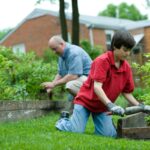
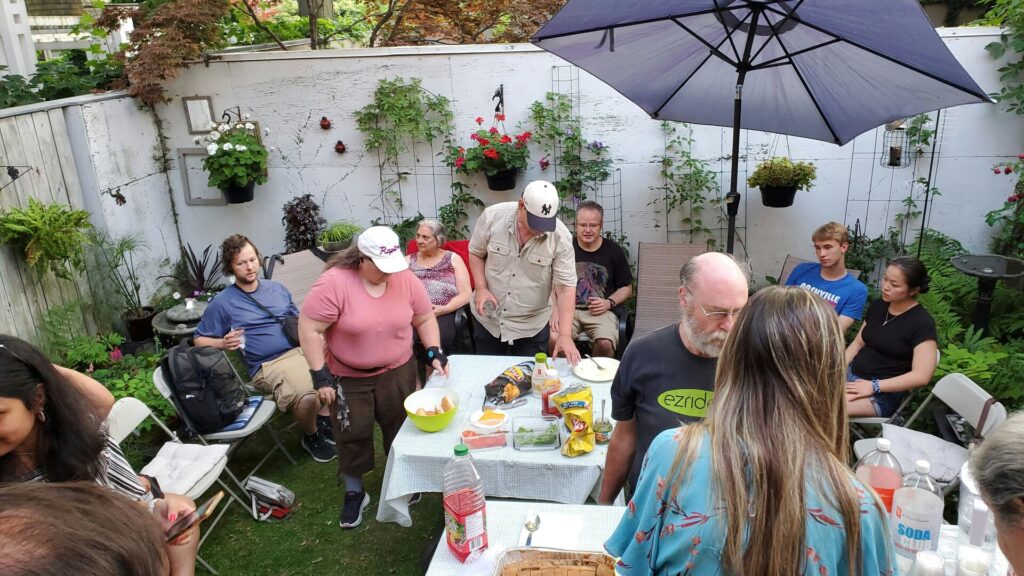
Start absurdly small. Host a block party with no political talk allowed. Organize a neighborhood tool library where people lend ladders and lawnmowers rather than buy duplicates. Create a parent rotation for after-school pickup to give single parents a break. Volunteer once a month on a Saturday at the local food pantry or literacy program. These are not activism. They are life.
Some communities have taken it further. In cities like Tulsa and Indianapolis, mutual-aid networks have quietly filled gaps left by failing government services in specific neighborhoods, delivering diapers, tutoring children, and connecting job seekers, without a single tax dollar.
Churches, mosques, and secular groups run job-training programs that succeed because they know the people they serve. Local sports leagues and community clubs still mix children from red and blue families because the game matters more than the campaign sign.
Technology can help here, too. Apps that match neighbors for skill-sharing already exist in pilot form. Hyper-local neighborhood platforms can be redeemed from gossip into genuine coordination if enough people insist on civility. The community’s infrastructure is in place. What it needs is people willing to use it for something more than complaints.
None of this requires waiting for permission. A majority is not needed—only a handful of people willing to go first. One family starts a community garden. Another hosts game nights. A third organizes a neighborhood watch that actually watches out for each other. Momentum builds because humans are wired for cooperation when the stakes feel real and local.
The Hard Truth and the Hopeful One
The hard truth is that politics will remain tribal for the foreseeable future. Media incentives, donor incentives, and human psychology guarantee it. Expecting politicians to become statesmen suddenly is like expecting a casino to give away the house money. It is not going to happen. The hopeful truth is that we do not need them to do so.
The real country, our block, our town, our region, still functions when we remember that our neighbors are not enemies. They are co-workers, fellow parents, fellow sufferers, and fellow dreamers who happen to watch different news channels. Most are decent. Most want the same basic things: safety for their children, dignity in their work, and a community that feels like home.
Rebuilding that community will not be dramatic. There will be no viral moment, no victory speech. It will look like casseroles delivered, fences mended, children coached, and grudges slowly set aside because shared life is heavier than shared ideology.
This is the American genius: not perfect national unity imposed from above, but a thousand imperfect local experiments in mutual aid happening every single day. The Founders understood this when they left most power to the states and the people. We have drifted far from that wisdom, but the drift is not irreversible.
Start Today
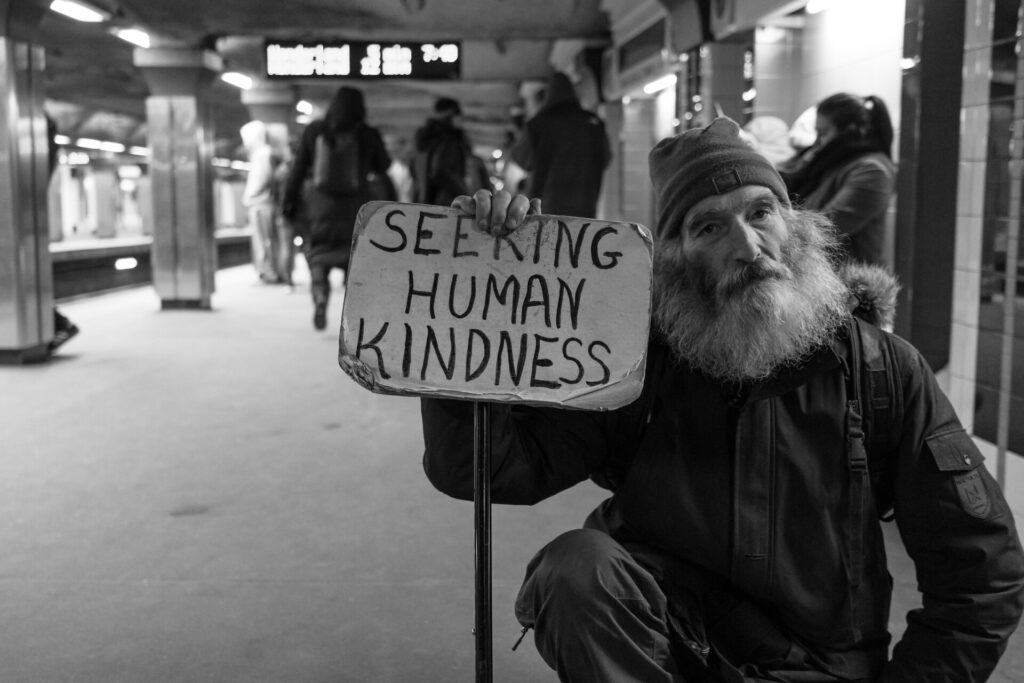
Turn off the cable news for a weekend. Walk across the street and introduce yourself to the family whose politics you assume you disagree with. Ask what they need. Offer what you can give. Do it again next month.
Our neighbor is not the problem. Our neighbor – and being neighborly- is the answer. If enough of us remember that, the tribes will lose their power, not because we defeated them in an election, but because we quietly rendered them irrelevant. When they become irrelevant, they become impotent.
One porch conversation, one helping hand, one shared meal at a time.
The nation is not waiting for the next “rising star” politician in Washington. It is waiting for all of us to start acting like neighbors again.