
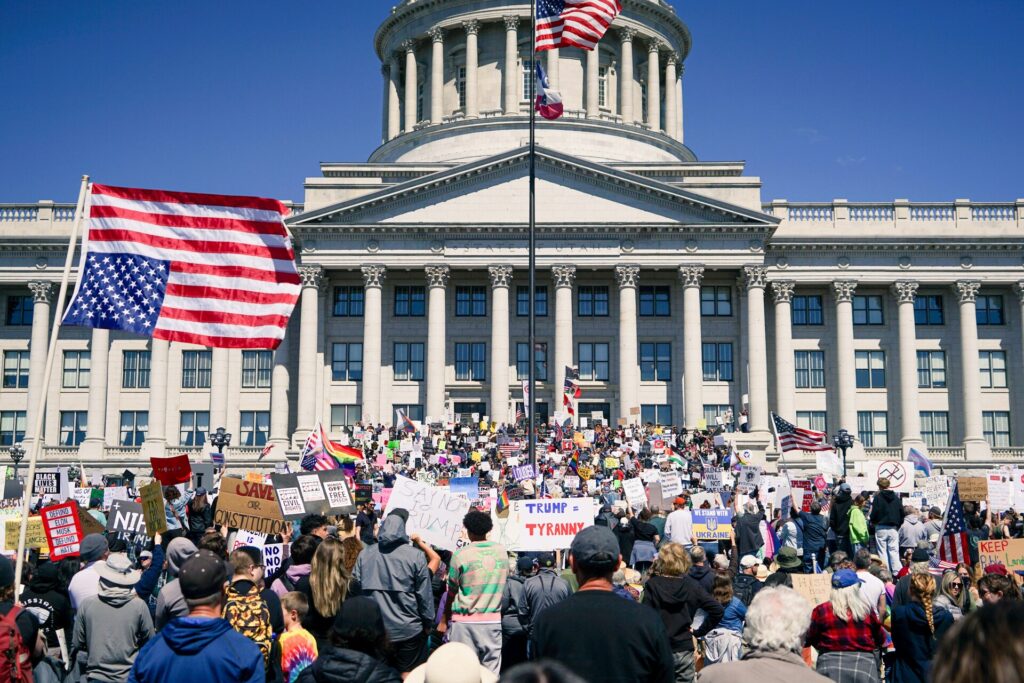

That calendar is not a civic courtesy. It is the mechanism by which a free people keep the government they created, and if we treat it as background noise, we should not be surprised when someone else starts speaking for us.
The midterm elections are just weeks away, and many states are already voting. In Texas, the registration deadline passed on October 5, though early voting runs from October 19 through October 30. Election Day is November 3.
The First Words Still Matter
When Americans reach for one famous line to represent the country’s founding, they usually turn to the Declaration of Independence, which opens with the words “When in the Course of human events.” A few lines later, the sentence that tells us who holds power appears: governments are instituted among men, “deriving their just powers from the consent of the governed.”
The Constitution put the same idea in three words that still frame every election in the country: We the People. It did not say we the parties, or we the agencies, or we the officials who have decided, this cycle or the last one, that the electorate is a problem to be managed. It said the people, the whole noisy, inconvenient, disagreeable people.
That is not poetry. It is the republic’s operating system. Every restriction on the franchise, every expansion of it, and every claim that an election was stolen or that a neighbor should be kept from the ballot has to answer to those words. If the answer is “because we do not trust the people,” the project has already gone off the rails.
Voting Is How Consent Is Given
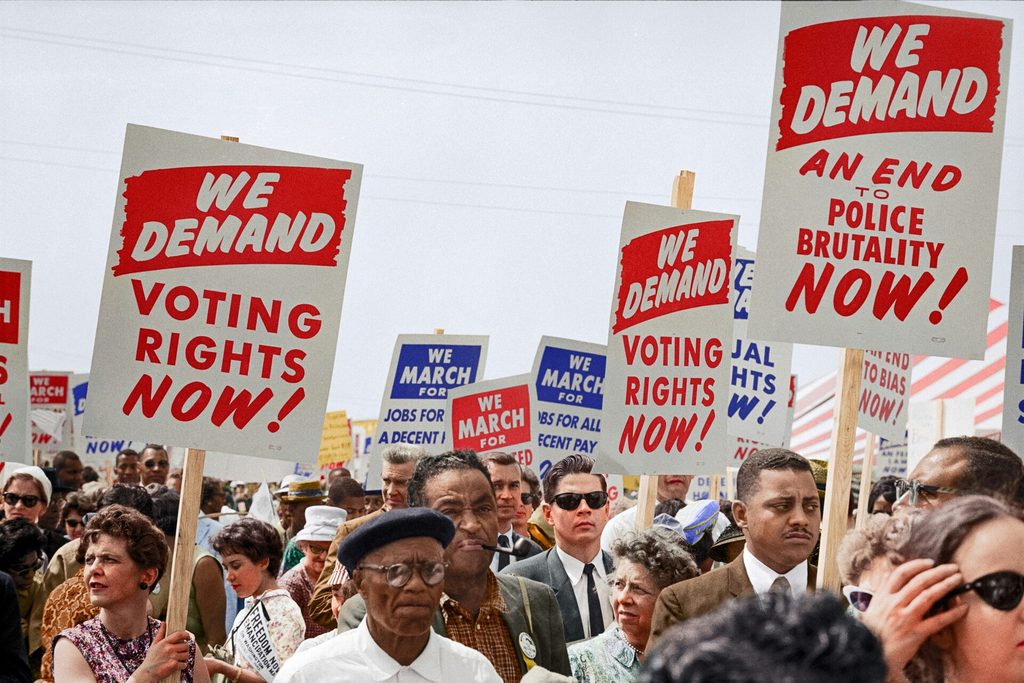
A republic without turnout is a theory. For most of us, the ballot is the only instrument we will ever hold that can change who writes the laws, who sits on a school board, who draws a map, and who gets the next two years to govern.
Midterms usually draw fewer voters than presidential years, and that drop-off is not a law of nature. It is a habit. People who skip November don’t escape the consequences. They live under budgets they didn’t influence, courts they didn’t staff, and rules they didn’t ratify, and silence in that situation isn’t neutrality. It transfers power to whoever showed up.
That is why voting is not a partisan hobby. It is the minimum act of ownership in a country that claims to be self-governing, and we can dislike both tickets and still owe a duty to the system that lets us say so in public.
What the Numbers Say About Voter Fraud
Against this backdrop, voting in our republic demands nuance and care when it comes to voter fraud. Let’s start with what the documented record shows. The Heritage Foundation, a conservative think tank, maintains the best-known catalog of proven election-fraud cases, listing roughly 1,600 across more than four decades. Heritage is clear that its database is a sampling and not a complete count, so any rate drawn from it is best read as a floor rather than an exact figure. Even so, the scale is striking.
Over those same decades, Americans cast more than two billion ballots in federal elections, so even if we count every case in the database against federal ballots alone, we find fewer than one proven case for every million ballots cast. (That ratio is our own back-of-the-envelope calculation, not a figure Heritage publishes).
Mail voting, often described as the open barn door, follows the same pattern. A November 2025 Brookings Institution analysis of mail-ballot cases in that same database from the 2016, 2018, 2020, and 2022 general elections found about four cases for every ten million mail ballots, or 0.000043 percent. It also found that universal vote-by-mail states accounted for the smallest share of that already tiny total.
Noncitizen voting is the current focus of concern, and the record there is also small. Heritage’s database lists just under 100 proven cases over the decades it covers, and recent state reviews point in the same direction. Michigan identified 15 apparent noncitizens who cast ballots in 2024 (16 counting one earlier case) out of more than 5.7 million, or about 0.00028 percent.
Iowa’s Republican secretary of state first directed county officials to challenge 2,176 registered voters flagged as possible noncitizens, then confirmed 277 noncitizens on the rolls after checking federal data, with 35 counted ballots out of roughly 1.67 million cast. Georgia officials found about 20 noncitizens on a voter roll of more than 8.2 million.
Not every review is that small, though. Ohio’s secretary of state, also a Republican, referred 1,084 suspected unlawful noncitizen registrations to the Justice Department in 2025. Of those, 167 people appear to have voted in a federal election between 2018 and 2024, and the referrals also included 99 people who appear to have voted in two states in the same election. These are referrals, not convictions, and the same official describes noncitizen registration and voting as exceedingly rare. They suggest that proven-case counts grossly understate what officials suspect, and do not come close to justifying the rhetoric often spouted by politicians with suspect motives.
What the Charges and the Exceptions Tell Us
Recently, the Justice Department announced charges against sixteen noncitizens for illegal voting and related election crimes, one of several such announcements in recent weeks. Charges are allegations, and every defendant is presumed innocent, but if the evidence holds, those are real crimes that should be prosecuted. A stolen vote is both a crime and a civic insult. By comparison, sixteen defendants across several elections are a tiny number compared with the roughly 154 million people who voted in 2024 alone. Fraud exists like plane crashes: it is real, it is punished, and it does not describe how most Americans travel.
To be fair, rare is not never, and detection has limits. Fraud has been serious enough to void results in close contests. Courts invalidated hundreds of fraudulent absentee ballots in Miami’s 1997 mayoral race, and in 2018 North Carolina’s elections board unanimously ordered a new congressional election after an absentee-ballot scheme in the 9th District, where the leading candidate held a 905-vote margin.
To our knowledge, no audit has shown fraud that changed a statewide or national outcome, but those cases remind us that safeguards on absentee ballots matter most in tight races.
So the honest conclusion is a narrow one. The record does not point to a hidden reservoir of stolen elections, and it does not justify treating rare offenses as a reason to rewrite who gets to vote. It does justify ordinary, proportionate safeguards, along with prosecution of the cases that do occur.
Election Security Has Broad Support
Some of what travels under the banner of election security is ordinary administration, such as list maintenance, signature checks, citizenship verification at registration, and photo ID at the polls. Reasonable people support those tools, and so do we, as does most of the country. A 2025 Pew Research Center survey found that 83 percent of U.S. adults favor requiring government-issued photo ID to vote, including 71 percent of Democrats and 95 percent of Republicans.
An October 2024 Gallup poll also found 84 percent support for photo ID and 83 percent support for requiring first-time registrants to prove citizenship. A republic can confirm that the person holding the ballot is the person on the roll, and that the person on the roll is a citizen.
The real question is proportion, and the line is crossed when the rarity of a crime and the burden of a rule stop being weighed against each other, because the cost of a heavy rule falls on lawful voters rather than on the few who break the law.
Those rules have been arriving state by state and piece by piece. According to the Brennan Center for Justice, a voting-rights research group, lawmakers in at least 47 states considered at least 486 restrictive voting bills in 2025, and at least 17 states enacted 32 restrictive laws, 31 of which will be in effect for the 2026 midterms. The same tally counts 30 expansive laws in 25 states, so the picture is mixed, though 2025 was the first year since at least 2020 in which restrictive enactments outnumbered expansive ones.
Security Should Not Shrink the Electorate
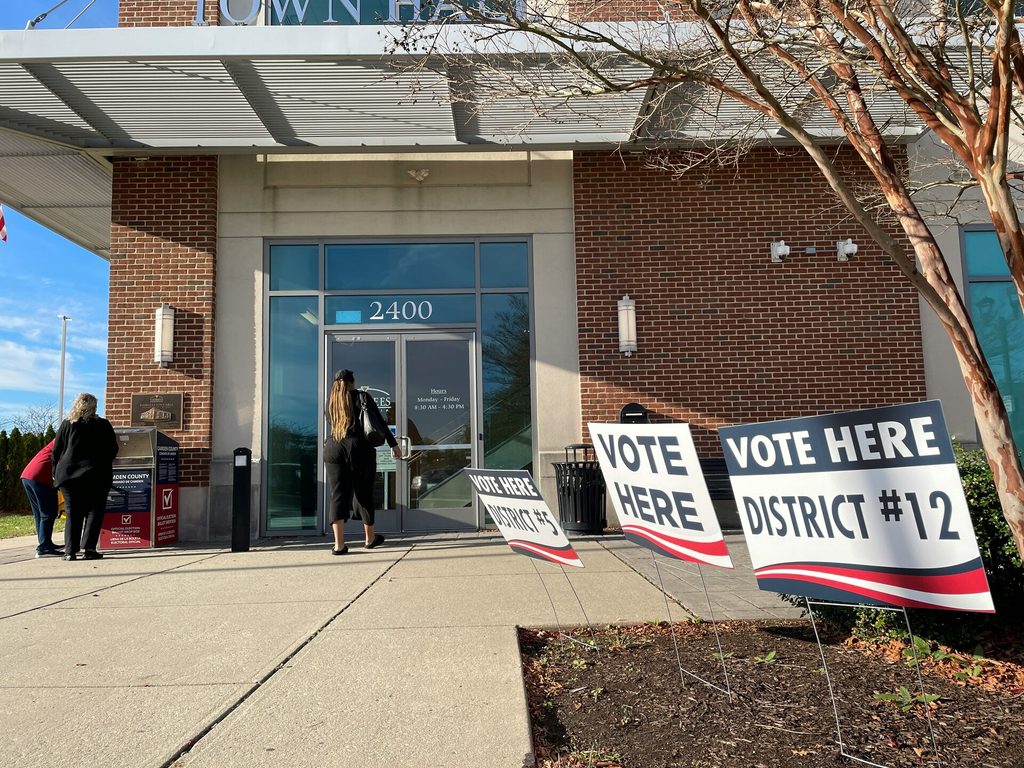
Several recent changes land on ordinary voters in practical ways. Ohio, for one, ended its mail-ballot grace period in 2025, and the Voting Rights Lab reports that the share of mail ballots rejected as late in its spring primary rose roughly tenfold compared with the 2024 general election. In June, the Supreme Court ruled 5-4 in Watson v. Republican National Committee that states may count mail ballots postmarked by Election Day, leaving the choice to each state; 14 states plus Washington, D.C., currently have such grace periods.
Proof-of-citizenship bills have also multiplied, even though many citizens, including native-born ones, do not keep a passport or original birth certificate within easy reach, and some states have narrowed acceptable ID forms or limited drop boxes.
The federal government has gone further: the Department of Homeland Security is running what it calls the Unlawful Voter Initiative, a review of voter records in all 50 states aimed at up to hundreds of thousands of individuals, according to a whistleblower account released by the watchdog group Democracy Defenders Fund.
The whistleblower alleges that hundreds of federal employees were given a quota of 40 voter reviews a day, roughly twelve minutes each, using data the training materials themselves acknowledge can be unreliable. DHS rejects that description, saying the work is being done diligently and professionally and that there is no quota. Whichever account proves closer to the truth, an effort of that scale aimed at an offense this rare deserves scrutiny.
We should ask the democratic question in plain language. If documented fraud rarely moves an election, and new rules or sweeping reviews could keep some lawful citizens from completing a ballot, how do we weigh those two risks? A government that derives its just powers from the consent of the governed has to be careful about any rule that could thin out the governed. Security and access are not opposites, and a system worth trusting delivers both.
Power Stays With the People Only If We Use It
The founders were not naïve. They built a system that assumes ambition, faction, and error, but not a spectator sport. “We the People” is a claim of authority and a job description.
The job this fall is not complicated. We should check our registration, keeping in mind that deadlines in many states, including Texas, have already passed and that some states still allow same-day registration. If we vote by mail, we should request the ballot on time and follow the ID and signature rules our state actually uses rather than the ones we remember from four years ago. If we vote early or on Election Day, we should bring the identification our state requires. Then we should vote.
We should vote whether we are tired of the noise or think both parties have earned our skepticism, and whether we believe the last election was decided correctly or still have doubts. The remedy for a contestable count is a bigger, cleaner count next time, with more citizens in the room rather than fewer.
We Should Not Let Others Speak for Us
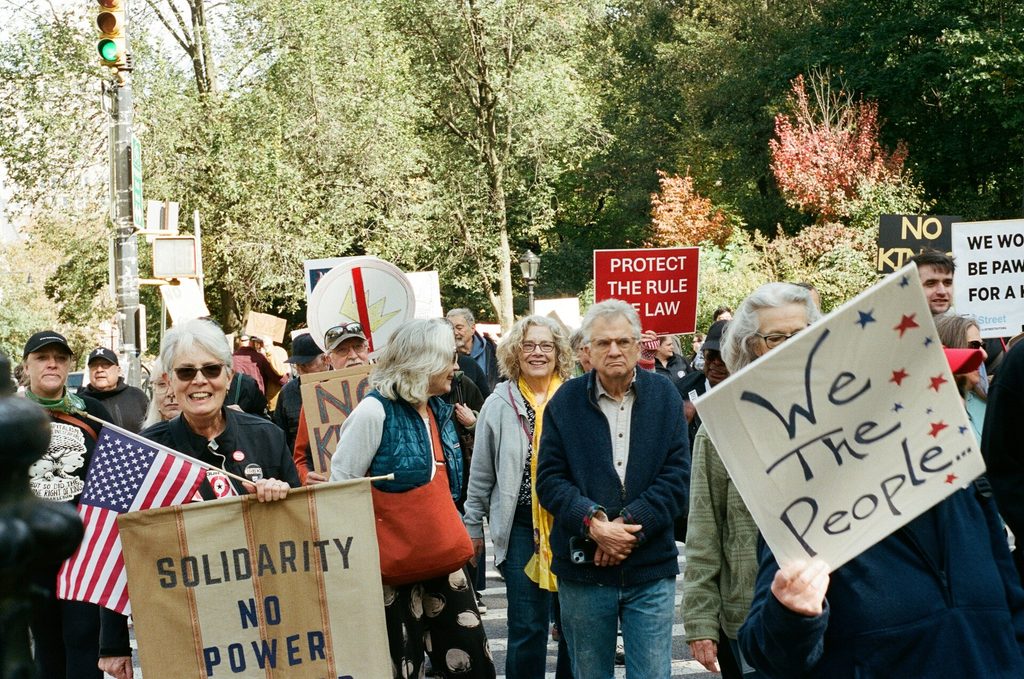
The loudest voices in American life will spend the coming weeks telling us that the other side is an existential threat and that our one ballot cannot matter. They are wrong on both points, but on the second, they are counting on us to believe them. An election is the one day the people outrank the professionals, and the one day the first three operative words of the American idea are not a museum inscription.
We the People.
We can speak in the only language the system is built to hear: show up, cast the ballot, and keep the power where the documents put it.
That is not a slogan for November. It is the job description for as long as this republic lasts.