
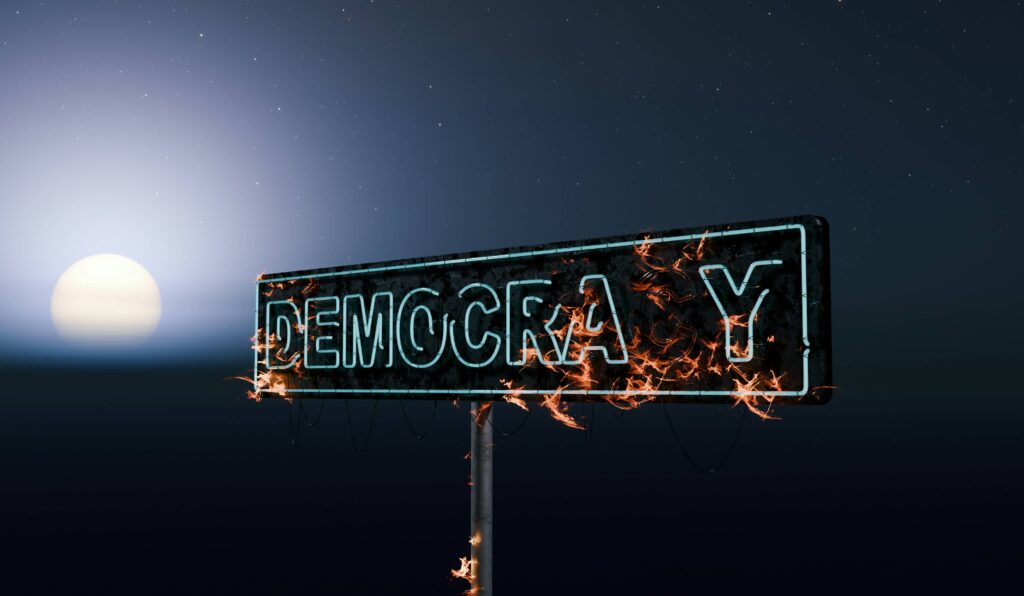

Throughout American history, democracy has been portrayed as an enduring beacon, resilient enough to withstand pressure from within and without. Recent events suggest a more precarious reality. The foundational principles of free elections, the rule of law, and peaceful transitions of power are under genuine strain, and the strain is documented, not speculative.
The metaphor of “deportation” is deliberate. Just as deportation involves the forced removal of something that belongs, democratic norms appear to be systematically pushed out of our political life.
Beginning with January 6, 2021, and extending to patterns that have deepened in the years since, the aggressive expansion of immigration enforcement, the erosion of due process, and a rising tide of political violence have touched Americans across the ideological spectrum. These are not abstract threats. They are documented, and they matter to all of us.
January 6, 2021: A Direct Assault on the Capitol
The most visceral and widely documented attack on American democracy in recent memory unfolded on January 6, 2021, when a mob of supporters of then-President Donald Trump stormed the United States Capitol in Washington, D.C.
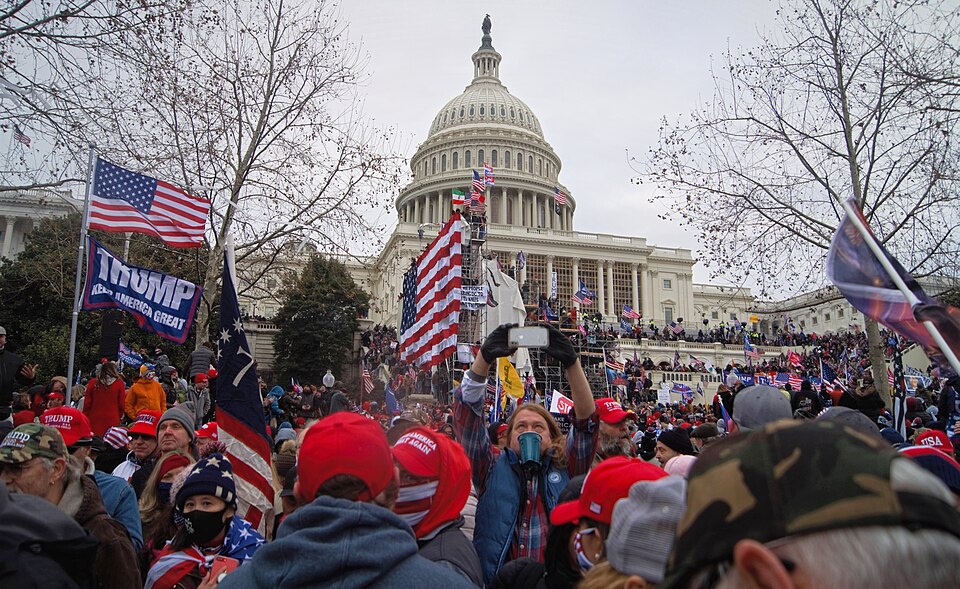
This was not a spontaneous outburst. It was the culmination of months of planning, fueled by unsubstantiated claims of widespread fraud in the 2020 presidential election, which Joe Biden won. The attack aimed to disrupt the congressional certification of the Electoral College results, a ceremonial but constitutionally essential step in affirming the will of voters.
The groundwork was laid immediately after the election. Trump declared premature victory and began spreading allegations of fraud, demanding that vote counting stop in key states. By December, far-right organizations, including the Proud Boys, Oath Keepers, and Stop the Steal organizers, were actively coordinating. On December 18, Trump called for supporters to come to Washington, framing January 6 as a pivotal moment to “save” the election.
On January 6 itself, the “Save America” rally at the Ellipse drew a large crowd. Trump addressed them for over an hour, urging them to “fight like hell” and march to the Capitol to pressure Vice President Mike Pence and Congress. By the time the rally was underway, Proud Boys had already begun moving toward the Capitol. The breach began at 12:53 p.m. near the Peace Monument. By 2:11 p.m., rioters had penetrated the building, forcing the Senate to recess at 2:13 p.m. and the House at 2:18 p.m.
What followed was a sustained assault on the seat of American government. Officers were beaten, tased, and crushed. Offices were vandalized. Chants of “Hang Mike Pence” echoed through the halls as a makeshift gallows stood outside.
Ashli Babbitt was shot and killed by a Capitol Police officer while attempting to breach the Speaker’s Lobby. Officer Michael Fanone was tased and beaten, later recounting that he pleaded for his life. Over 140 officers were injured. Five people died in connection with the events, including Capitol Police Officer Brian Sicknick, who succumbed to injuries the following day.
Congress reconvened that evening and certified Biden’s victory by 3:44 a.m. on January 7. The republic held, but the rupture was real and lasting.
Legal consequences have been substantial. As of early 2026, more than 1,583 individuals have been arrested, with 1,270 convicted. Of those, 1,009 pleaded guilty, representing 64% of all those arrested. Charges range from trespassing to seditious conspiracy. Oath Keepers leader Stewart Rhodes was convicted and sentenced to 18 years in prison.
The investigation remains the largest in U.S. history. Politically, Trump was impeached a second time on January 13, 2021, for incitement of insurrection, though he was acquitted in the Senate. A House Select Committee investigation running from 2021 to 2022 documented a multi-part plan to overturn the election. Upon returning to the presidency in 2025, Trump pardoned nearly 1,600 participants, labeling them “hostages.”
January 6 stands as a singular moment, but it did not emerge from a vacuum, and it did not mark an endpoint.
Broader Patterns of Democratic Erosion
Beyond January 6, American democracy has faced a range of pressures that have accumulated over several years. These include legislative efforts to restrict voting access, targeted harassment of election workers, and a surge in political violence that cuts across partisan lines.
Following the 2020 election, election denialism took hold in significant portions of the electorate and translated into policy. Multiple states passed laws imposing stricter voter ID requirements and limiting mail-in balloting. Critics have argued these measures disproportionately affect minority voters and echo older suppression tactics. Supporters frame them as fraud prevention, though multiple audits and court rulings found no evidence of widespread irregularities in 2020.
Election workers have borne a particular burden. Widespread death threats following the 2020 cycle forced many experienced administrators to resign, disrupting the civic infrastructure that democracy depends on. According to Pew Research, 65% of Americans say they always or often feel exhausted when thinking about politics. At the same time, a Hidden Tribes survey found 86% say they feel exhausted by the division in America generally.
Political violence has escalated in ways that implicate actors across the ideological spectrum. In 2020, a plot to kidnap Michigan Governor Gretchen Whitmer was foiled. In 2022, Paul Pelosi was attacked in his home. Assassination attempts on Trump in 2024 and 2025 added to the pattern.
Most recently and starkly, conservative activist Charlie Kirk was shot and killed on September 10, 2025, at Utah Valley University in Orem, Utah, while speaking at an outdoor campus event organized by Turning Point USA. He was 31 years old. The shooter, 22-year-old Tyler Robinson, fired a single shot from a rooftop approximately 142 yards away before fleeing the scene. Robinson surrendered to authorities the following day and faces aggravated murder charges, with prosecutors seeking the death penalty. Court proceedings remain ongoing as of early 2026.
Kirk’s assassination shocked the country and ignited debate about political rhetoric, public safety, and the culture of violence that has taken hold in American civic life. No corner of the political spectrum is immune to this violence, and no honest accounting of democratic erosion can ignore it.
ICE Expansion and the Militarization of Enforcement
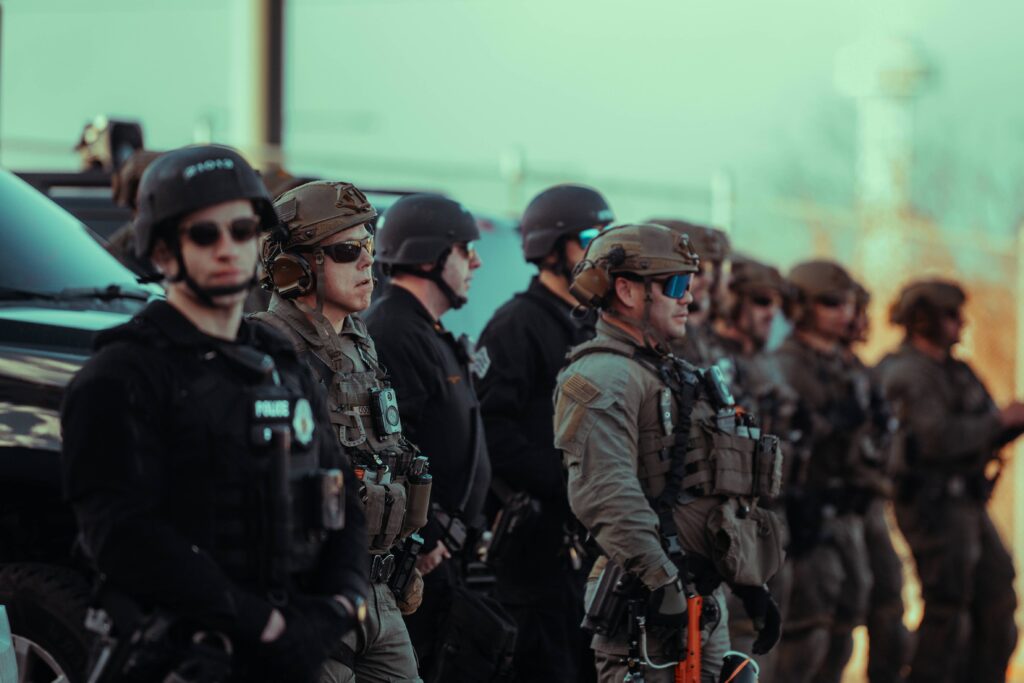
Beginning in January 2025, the second Trump administration pursued an aggressive expansion of Immigration and Customs Enforcement operations that has raised serious questions about executive overreach, civil liberties, and the normalization of federal force against civilian populations.
ICE’s workforce more than doubled over the course of 2025, growing from approximately 10,000 agents to over 22,000 through an intensive recruitment campaign. A $45 billion funding allocation over four years was directed primarily toward detention operations, with the capacity to hold more than 100,000 individuals annually.
ICE arrests surged to an average of more than 800 per day in Trump’s first ten months, the highest levels in over a decade, and detention facilities expanded by 91%, with over 104 additional sites added by November of that year. The detained population exceeded 70,000 by January 2026.
Tactics employed during this expansion drew significant scrutiny. Reports documented agents entering homes without judicial warrants, a practice that raises serious constitutional concerns under the Fourth Amendment’s protections against unreasonable searches and seizures. Internal directives reportedly imposed daily arrest quotas, driving workplace raids and the establishment of community tip lines for reporting suspected undocumented individuals.
The consequences turned deadly in January 2026. In Minneapolis alone, three separate shootings involving federal immigration enforcement agents occurred within weeks of one another. On January 7, ICE agents fatally shot 37-year-old resident Renée Macklin Good during an operation, sparking immediate protests.
On January 24, Border Patrol agents shot and killed Alex Jeffrey Pretti, a 37-year-old ICU nurse and U.S. citizen, near Nicollet Avenue and 26th Street. Video footage showed agents in a confrontation with Pretti before the fatal shots were fired. Federal agents described the shooting as self-defense, a characterization disputed by Pretti’s family and eyewitnesses.
The deaths drew hundreds of demonstrators into the streets and prompted public appeals from Minnesota Governor Tim Walz and Minneapolis Mayor Jacob Frey for federal restraint. Federal agents denied local officials access to the shooting scenes.
Critics argue that these incidents reflect how aggressive enforcement, when pursued at this scale and speed, creates conditions that put lives at risk and erode the public trust that democratic governance depends upon.
The Erosion of Due Process
In parallel with the ICE expansion, the erosion of due process protections has accelerated, threatening one of the most fundamental pillars of the rule of law. Due process, guaranteed by the Fifth and Fourteenth Amendments, ensures fair treatment through judicial proceedings. It applies to citizens and non-citizens alike, a principle the Supreme Court has reaffirmed.
In the first year of Trump’s second term, federal immigration policy moved in the opposite direction. Expedited removal processes were significantly expanded, allowing deportations without full judicial hearings.
By November 2025, for every person released from ICE detention, more than fourteen were deported directly from custody, dramatically limiting opportunities for legal recourse. Reports documented attempts to deport unaccompanied minors without adequate protections and the transfer of asylum seekers to specialized confinement facilities without proper hearings.
The ACLU and other organizations have secured important legal victories, including Supreme Court rulings mandating due process protections in specific contexts. But the pace of policy action has outstripped the pace of legal remedy in many cases, and the cumulative effect has been a system in which executive enforcement power has increasingly operated ahead of judicial oversight.
The concern here extends beyond the immediate individuals affected. When legal shortcuts become normalized in one context, they set precedents that can migrate. A system that permits the erosion of due process for one population creates the architecture for eroding it for others. That is not a hypothetical warning. It is a lesson drawn from history.
What We Can Do
The “deportation” of democracy is not hyperbole. It is a documented process, and the pattern is clear enough to warrant a response beyond alarm.
That response starts with us. It means protecting election security and the workers who make it function. It means choosing civic engagement over cynicism, and cross-partisan conversation over contempt. It means demanding accountability from those who enforce our laws and restoring the due process protections the Constitution guarantees to everyone on American soil.
None of this is partisan. It is a commitment to the framework that enables self-governance. Moderates across the political spectrum, people tired of extremism and still invested in the promise of democratic life, are the ones best positioned to hold that framework together.
The republic has endured before because enough people chose, at critical moments, to defend it. That choice belongs to all of us now. Democracy must be defended, not deported.