
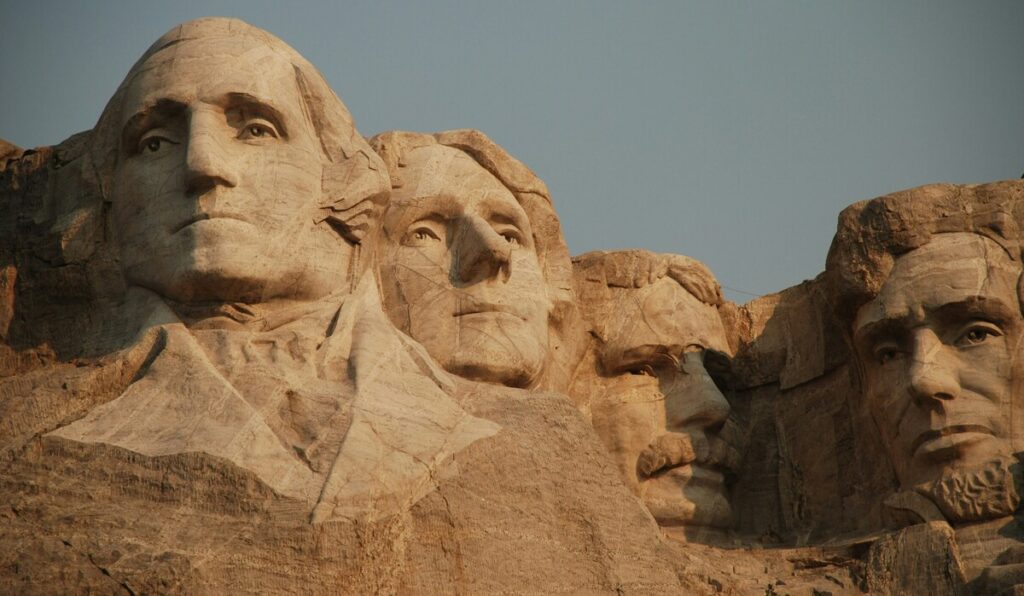

In our sharply divided times, it is worth remembering what made certain presidents truly great. Beyond policy victories or bold decisions, one of the most powerful marks of presidential greatness has been the ability to show charity toward political rivals.
These leaders understood that opponents were not enemies but fellow Americans, and they chose compassion when contempt would have been easier.
This quality transcends partisanship. It reflects a deep commitment to the Union, to democratic principles, and to the shared humanity that holds a nation together despite ideological differences. Throughout American history, several presidents exemplified this through personal acts, public gestures, and leadership choices that bridged divides rather than widening them. In an era when political combat has become the default mode of public life, their examples carry more weight than ever.
George Washington: Setting the Standard for Unity
George Washington established the foundation for charitable leadership before political parties fully emerged. In his Farewell Address of 1796, he cautioned against the spirit of party, warning it could lead to cunning, ambitious, and unprincipled men exploiting divisions for personal gain. He urged Americans to cultivate a cordial, habitual, and immovable attachment to the Union above all factional loyalties.
Washington lived by this principle by surrounding himself with advisors of sharply opposing views, most notably Thomas Jefferson and Alexander Hamilton. Despite their bitter rivalry, he valued their counsel and mediated their differences with patience and fairness. He refused to let tensions between his two most brilliant cabinet members fracture his administration, understanding that the nation’s early stability depended on holding competing visions in productive tension.
His decision to step down after two terms was itself a profound act of charity toward the young republic, preventing the kind of power consolidation that could have fractured the experiment before it took root.
No law required him to leave. His choice to do so anyway set a precedent that held for over a century. Washington treated political differences with restraint and respect, modeling leadership that served the country rather than personal triumph. His emphasis on national cohesion over partisan victory laid the moral groundwork for every president who followed.
Abraham Lincoln: “With Charity for All”
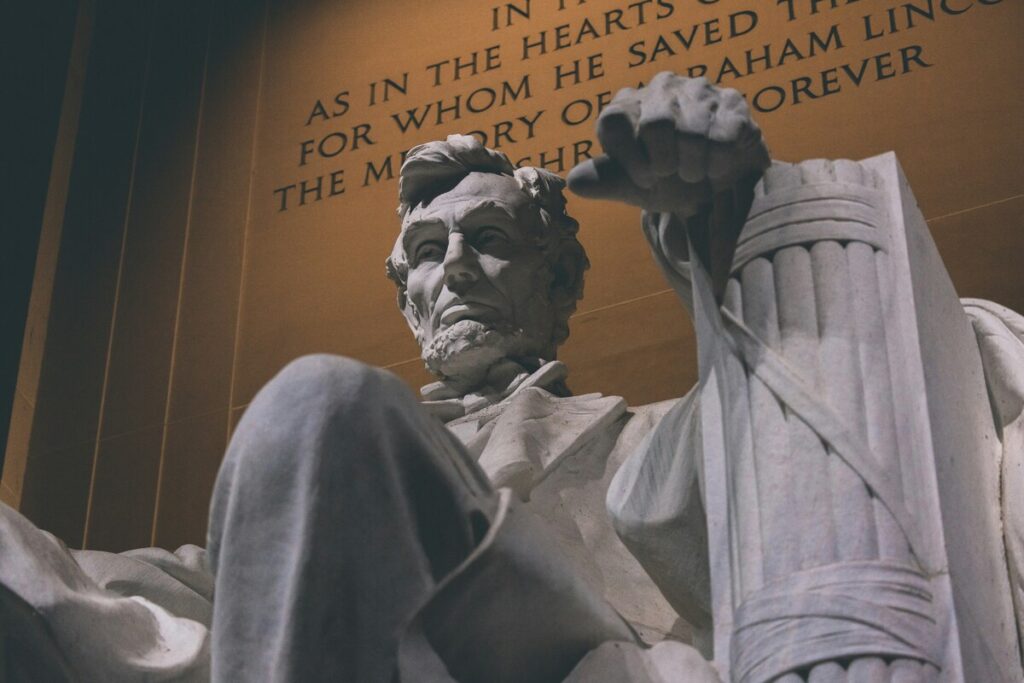
No president confronted deeper divisions than Abraham Lincoln, and no president’s response to those divisions remains a more enduring standard of charitable leadership.
In his first inaugural address, Lincoln reassured Southern states he had no intention of interfering with slavery where it existed and pleaded directly: “We are not enemies, but friends. We must not be enemies.” He shifted the moral burden for starting violence by provisioning Fort Sumter with supply ships, giving advance notice of peaceful intent, and making clear that any first blow would come from the other side.
His Second Inaugural, delivered as Union victory became visible, stands as one of the most extraordinary expressions of presidential compassion ever committed to paper.
Rather than triumph, he offered grace. “With malice toward none, with charity for all, with firmness in the right as God gives us to see the right, let us strive on to finish the work we are in, to bind up the nation’s wounds.” Even as the war raged, he showed mercy to Confederate sympathizers, personally intervening in cases involving imprisoned individuals and their families.
Lincoln visited wounded soldiers from both Union and Confederate armies, absorbing the war’s human cost personally. His approach was not naive appeasement but principled leadership aimed at reconciliation. By prioritizing charity over vengeance at the moment when vengeance would have been most justifiable, he laid the moral foundation for Reconstruction, had he lived to guide it. Lincoln demonstrated that greatness involves healing divisions rather than deepening them, and that the hardest test of moral character comes when one has the power and popular support to be cruel.
John Adams and Thomas Jefferson: Reconciliation Across Bitter Rivalry
The reconciliation between John Adams and Thomas Jefferson stands as one of the most moving stories in American political history. As rivals, Adams, a Federalist, and Jefferson, a Democratic-Republican, clashed sharply and personally over their visions for America. The 1800 presidential race was particularly vicious, with accusations that by today’s standards would end careers overnight. Their estrangement lasted over a decade.
Reconciliation came through the patient efforts of their mutual friend Benjamin Rush, a fellow signer of the Declaration of Independence, who worked from early 1811 through January 1812 to convince both men to renew their friendship. Rush urged them to “bury in silence all the causes of your separation.” When Adams wrote to Jefferson on January 1, 1812, a correspondence resumed that continued until the last year of both men’s lives.
In that post-reconciliation period alone, 158 letters passed between them, covering philosophy, history, religion, and personal reflection. Their total lifetime correspondence, compiled in the definitive Cappon edition, runs to 380 letters spanning half a century.
Jefferson kept busts of his former rivals, including Adams and Hamilton, at Monticello, a quiet acknowledgment that opponents deserve recognition even across lines of disagreement. This reconciliation was not a political calculation but a profound act of humility.
Both had held the presidency. Both had been wounded by the other. Both chose friendship over enmity. Their deaths on the same day, July 4, 1826, fifty years after the Declaration of Independence they had both signed, remains one of history’s most extraordinary symmetries, as though history itself wanted to mark the possibility of transcending partisan wounds for the greater good.
Dwight D. Eisenhower: Bipartisan Practicality and Respect
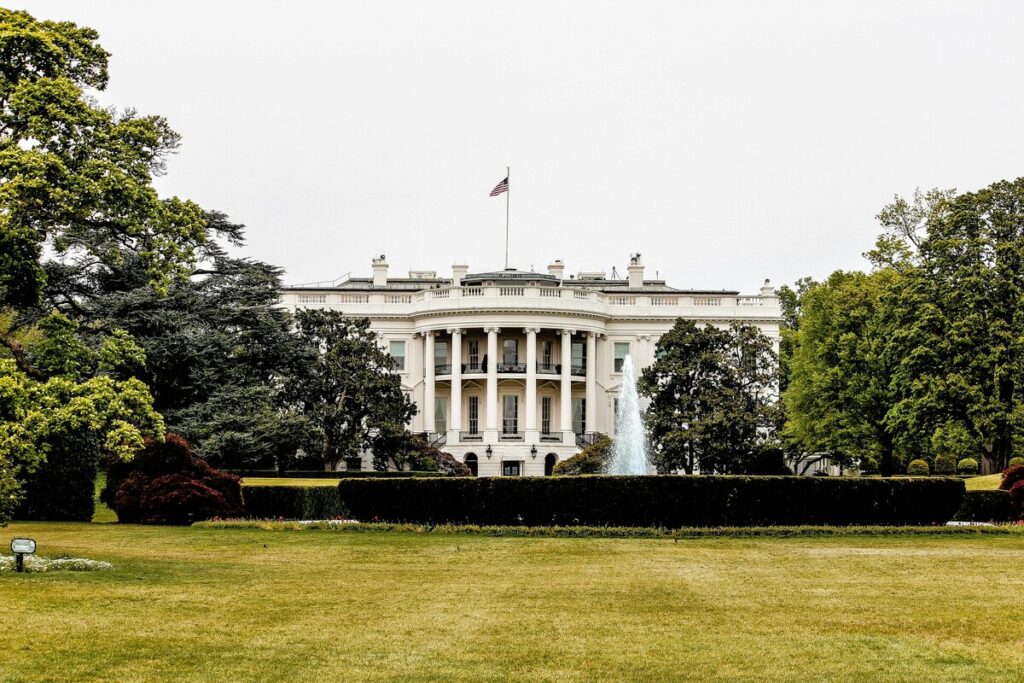
Dwight D. Eisenhower governed with a remarkable consistency, showing pragmatic charity toward political rivals. A Republican president, he expanded Social Security, raised the minimum wage, created the Department of Health, Education, and Welfare, and signed landmark civil rights legislation.
He built the Interstate Highway System through cross-party coalitions, understanding that the nation’s infrastructure needs did not align with partisan boundaries.
Eisenhower refused to embrace the politics of personal destruction that characterized the red-baiting atmosphere of the early 1950s. While reluctant to confront Senator Joseph McCarthy publicly, he worked privately and steadily to undermine the excesses of McCarthyism, refusing to lend presidential credibility to its methods.
When the Senate voted to censure McCarthy in December 1954, Eisenhower had helped create the conditions that made it possible. His leadership style emphasized solutions over ideology, extending respect and collaboration to Democrats without compromising core principles. He showed that national progress is rarely achieved by those who treat every political opponent as a moral enemy.
Ronald Reagan and Tip O’Neill: Friendship After 6 p.m.
The relationship between President Ronald Reagan and Democratic Speaker Tip O’Neill offers perhaps the most human modern example of charity toward rivals.
Ideologically opposed in nearly every dimension, Reagan championing tax cuts and limited government, O’Neill defending liberal priorities with equal conviction, they battled fiercely on policy. Yet they maintained a genuine personal friendship rooted in shared Irish heritage, shared humor, and mutual respect.
After John Hinckley Jr. shot Reagan on March 30, 1981, O’Neill was the first non-family member granted access to his hospital room at George Washington University Hospital. Reagan’s legislative aide, Max Friedersdorf, witnessed what happened and recounted it for the Miller Center’s Reagan Oral History Project.
O’Neill walked to the president’s bedside, grasped both his hands, and said: “God bless you, Mr. President.” Reagan, still groggy from surgery, lit up and smiled. “Thanks for coming, Tip,” he said. O’Neill got down on his knees, still holding the president’s hand, and prayed the 23rd Psalm. He was crying when he finished. Before leaving, he kissed the president on the forehead.
They famously agreed that after 6 p.m., they could be friends, deliberately separating political combat from personal regard. Reagan called O’Neill a friend at his 1986 retirement party, noting that their good-natured sparring was a sign of affection. Their example proves that charity toward rivals requires neither agreement on issues nor the pretense of it. It requires only the recognition of shared humanity and a willingness to see the person behind the position.
Why Charity Toward Rivals Matters Today
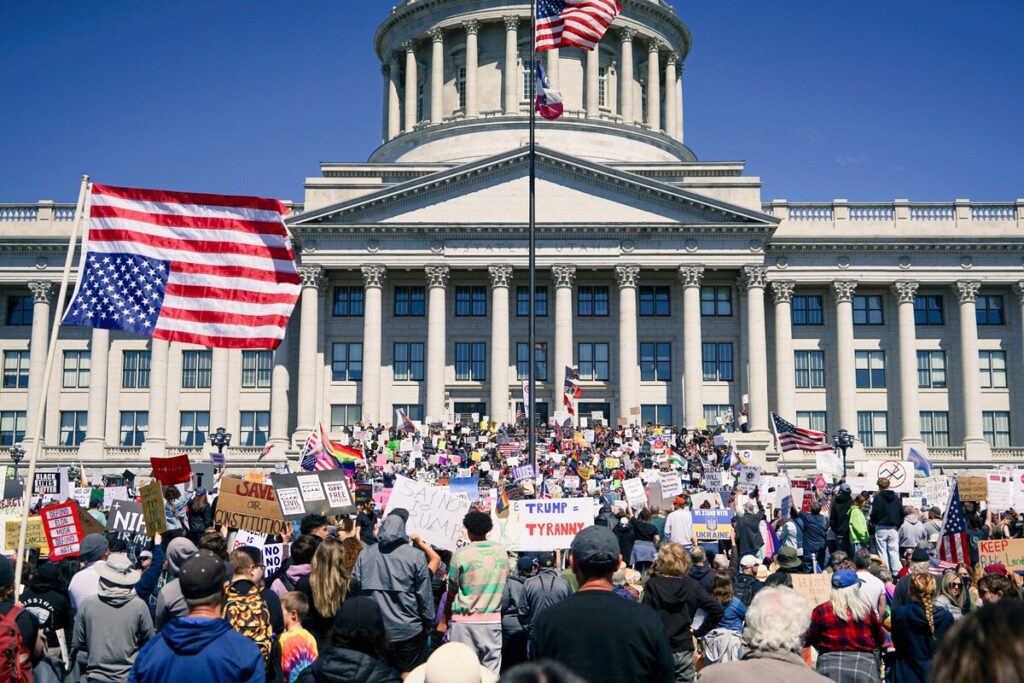
In today’s polarized climate, the examples of these presidents are more relevant than ever. They understood that democracy thrives on vigorous debate but survives only through mutual respect. Reconciliatory letters after years of silence, a prayer at a rival’s hospital bedside, an inaugural address offering grace to a defeated enemy: these acts humanize rivals and preserve the republic’s fabric.
Charity toward rivals does not mean abandoning principles. Lincoln remained resolute in preserving the Union. Reagan pursued his agenda with full conviction. The distinction lies in rejecting dehumanization and recognizing that political differences rarely define a person’s full character.
As Washington observed, national unity remains the main pillar of independence and liberty. Without it, even the most brilliantly designed constitutional system begins to buckle.
Great presidents modeled this behavior not because it was comfortable but because it was necessary. Emulating their example today means listening with genuine curiosity, offering grace, and seeking common ground without surrendering conviction. Leadership is not a zero-sum game. It is about elevating the collective good through empathy and moral courage.
The legacy of these presidents reminds us that the highest form of patriotism often involves extending charity to those with whom we most strongly disagree. True greatness lies in binding wounds, forging friendships across divides, and remembering that we are one people under a shared Constitution. That truth was not easy to live with in their time. It is not easy now. But it was worth the effort then, and history suggests it is worth the effort again.