
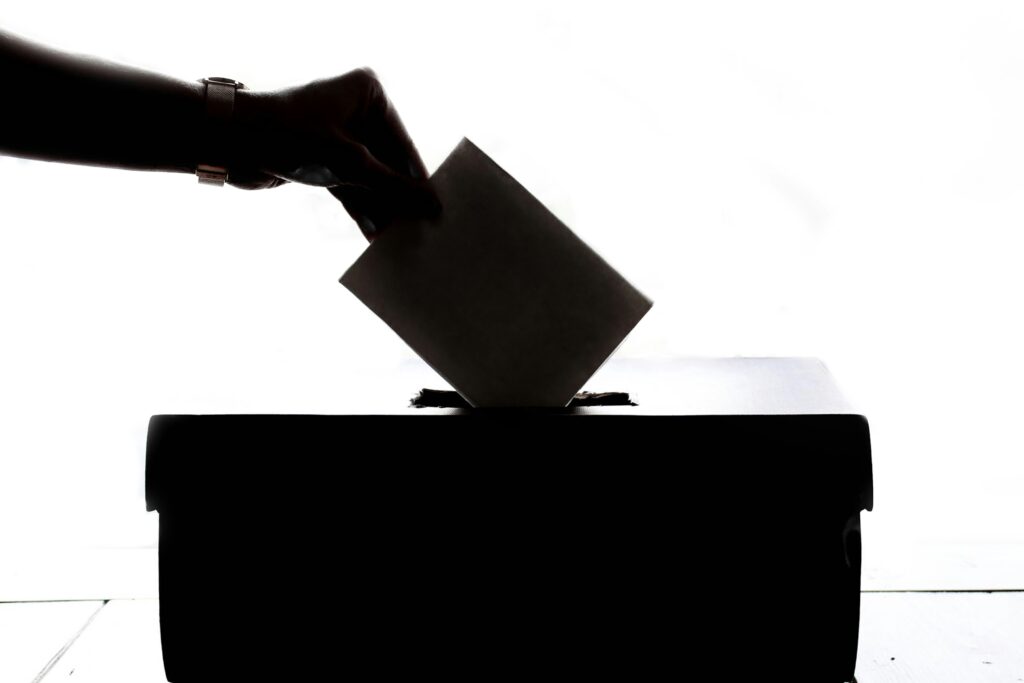

Elections are not spectacles or emotional outlets. They are the primary way free people choose their collective future. Policies enacted after Election Day directly shape inflation, border security, crime rates, energy costs, education quality, national debt, and the opportunities passed to the next generation.
As the well-known phrase reminds us, elections have consequences. Those consequences are real, lasting, and often irreversible within a generation.
In this high-stakes environment, Americans must approach voting and political discourse with greater discipline and clarity. A useful framework stems from an ancient principle at the heart of effective rhetoric and deliberate communication. Before any difficult conversation, each participant identifies not what they want to vent or argue in the moment, but what they genuinely hope to achieve.
This shift from reactive emotion to deliberate intention refocuses dialogue on outcomes rather than competing grievances. Applied to modern American elections, this discipline of intention can elevate civic participation from tribal signaling to responsible self-governance.
Defining Our Desired Outcome
Before engaging in debates about candidates, platforms, or policies, ask a simple but powerful question: What do we want this election to achieve when it is over? Write it down in one clear sentence.
This exercise promotes honesty and cuts through the noise of 24-hour media cycles and social media outrage. An intentional statement might sound like: “We want secure borders, controlled illegal immigration, and legal pathways that support economic growth and national security.”
It might be: “We seek fiscal policies that restrain national debt growth while preserving essential safety nets and promoting long-term prosperity.” It might be: “We aim for education reforms that prioritize literacy, critical thinking, and opportunity for all children regardless of background.”
By clarifying the end goal upfront, voters can better evaluate which candidates, parties, or policies are most likely to deliver measurable progress. This clarity forces a shift away from voting based on resentment, cultural affinity, or fleeting emotional satisfaction toward a focus on real-world results.
That shift is not a minor adjustment. It is the difference between participating in democracy and merely performing within it.
When Emotion Hijacks the Ballot Box

The single greatest threat to intentional voting is not apathy. It is misdirected passion. When fear, outrage, or tribal loyalty drives our choices, we often vote against something rather than for anything. We vote to punish rather than to build. We vote to send a message rather than to solve a problem.
The emotional satisfaction of that choice can be immediate and intense. Still, the consequences that follow are shaped entirely by the policies that win, not by the feelings that motivated our vote.
History offers repeated examples of this dynamic. Voters, energized by economic frustration, have elected candidates who then pursue unrelated culture-war agendas. Voters motivated by anger at the opposing party have handed power to leaders who had no coherent governing plan beyond opposition itself. In each case, the emotional energy was real and understandable, but the lack of a defined intended outcome left that energy without a clear target.
Media ecosystems and political campaigns understand this vulnerability well. Fear acts faster and more reliably than reason. Outrage spreads farther than nuance. An angry voter is easier to mobilize than a thoughtful one.
Recognizing this dynamic is the first step toward resisting it. When we feel political passion rising, that is precisely the moment to pause and return to the sentence we wrote down. Not because emotion is wrong, but because emotion without intention produces consequences we never agreed to.
Why Intention Is Essential: Elections Produce Tangible Results
History repeatedly shows that elections have concrete consequences. Shifts in control of the White House and Congress have led to markedly different outcomes across key areas of national life. Economic policy directions have influenced GDP growth, unemployment rates, inflation, and real wages.
Approaches to regulation and energy have affected costs for families and businesses, as well as America’s energy independence. Priorities in law enforcement and criminal justice have correlated with measurable shifts in urban crime statistics. Foreign policy orientations have shaped international alliances, military engagements, and America’s standing in the world.
Judicial appointments have altered constitutional interpretations on issues ranging from individual rights to federal authority, and these effects often last for decades beyond a single administration.
When citizens treat elections as personality contests, cultural battles, or opportunities to vent grievances without articulating clear desired outcomes, they risk waking up to policies whose outcomes diverge sharply from campaign rhetoric. Higher living costs, eroded institutional trust, increased social tensions, and policy reversals that feel disconnected from voter intent often follow.
Intention counters this dynamic. By anchoring decisions in a clear statement, voters can hold leaders accountable and demand specifics: How exactly will this proposal achieve the stated goal? What evidence or track record supports it? What metrics will indicate success or failure?
This outcome-focused mindset shifts political conversation away from endless culture-war skirmishes and identity-based appeals toward pragmatic evaluation of means and trade-offs. It is the difference between voting for a feeling and voting for a future.
Holding Leaders Accountable
The discipline of intention does not end when the polls close. Its greatest power may come in the months and years between elections, when most citizens disengage, and political accountability is at its lowest.
If we have written our sentence before an election, we have a measuring stick. We can return to it regularly and ask honest questions. Is the leader we elected moving toward the outcome we defined, or away from it? Are the policies being enacted producing the results we sought, or something else entirely? Are we being given real evidence of progress, or are we being fed new grievances to justify continued loyalty regardless of performance?
This kind of ongoing accountability is uncomfortable for both voters and leaders. It requires resisting the natural human tendency to rationalize the choices of those we supported and to catastrophize those we opposed. But it is exactly this discipline that separates self-governance from fandom. A republic does not run on loyalty to personalities. It runs on accountability to outcomes.
When enough citizens commit to this standard, they create a fundamentally different political environment. Candidates who promise results and deliver on them earn lasting support. Those who offer only rhetoric face real consequences at the next election. Over time, this dynamic reshapes what candidates promise and how they govern, not because politicians suddenly become more virtuous, but because incentives shift toward substance.
Applying Intention in Everyday Civic Life

The discipline should extend beyond the voting booth. When discussing politics with family, friends, neighbors, or online, we can begin by stating our intended outcome clearly: “We want stronger families, better schools, and broader economic opportunity. Which approaches have the strongest evidence of working?” This reduces defensiveness, discourages point-scoring, and invites more productive dialogue.
Leaders, candidates, and media figures carry a special responsibility in this regard. Rhetoric that prioritizes mobilization through fear, division, or performative anger weakens the health of democracy. When participants commit to speaking from a defined purpose rather than raw emotion, public discourse becomes healthier and more solution-oriented.
Of course, politics involves genuine value differences, complex trade-offs, and unintended consequences. Reasonable people can disagree on the best path forward even when they share broad goals such as the rule of law, innovation, opportunity, and national cohesion. The discipline of intention does not eliminate these realities. It organizes engagement with them and encourages citizens to debate productively while keeping the ends clearly in view.
The Founding Vision: Reason Over Passion
This approach echoes the spirit of America’s founding more deeply than many recognize. The Constitution’s framers were not naive about human nature. They studied history carefully, and what they found was sobering: republics collapse not from a lack of passion but from an excess of it.
Factions driven by emotion, regional loyalty, class interest, and personal grievance had destroyed democracies before. The framers designed a system of checks and balances precisely because they expected passion to be ever-present and believed reason had to be structurally protected against it.
James Madison wrote in Federalist No. 10 that the goal of republican government was to “refine and enlarge the public views” by channeling them through representatives capable of discerning the country’s true interest.
Alexander Hamilton argued in Federalist No. 71 for a government capable of “vigorous execution” rather than one that merely responded to the loudest voices of the moment. Both men hoped that citizens and their representatives would pursue the public good with foresight, not merely with feeling.
The discipline of intention is a practical tool for living up to that vision. When we define what we want before we vote and measure results honestly, holding leaders to standards rather than to team affiliation, we are practicing the kind of mature self-governance the founders hoped for and frankly, worried we might be incapable of sustaining.
A Call to Intentional Citizenship

America’s enduring strength has been its ability to debate vigorously while governing pragmatically, prioritizing results over ritualized conflict. As the nation faces economic pressures, technological disruption, demographic shifts, and global competition, intentional citizenship is more important than ever.
Treating elections as entertainment or as an outlet for frustration squanders the republic’s promise. Instead, we should embrace clarity and discipline: define the future we seek for our families, communities, and country. Evaluate candidates, platforms, and policies honestly against that standard. Then vote and advocate accordingly.
The consequences will follow, whether greater prosperity and security or stagnation and division. Elections determine the nation’s direction. Let us approach them with purpose.
The next time political passion rises, whether while scrolling social media, debating at the dinner table, or stepping into the voting booth, let us pause and ask: What do we want when this election ends? Write one sentence. Then act and speak from that intention.
Our fellow citizens, our children, and the republic will be stronger for it. By choosing deliberate intention over reactive outrage, we can reaffirm the mature self-governance that has long defined the nation at its best.