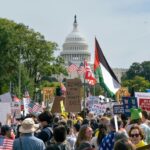


In a nation built on the radical idea that we the people could govern ourselves through reasoned debate and mutual respect, tribalism has become our most expensive habit. It does not just poison Thanksgiving dinner conversations or turn social media into battlegrounds. It exacts a steep toll on our wallets, our relationships, our institutions, and our collective spirit. The path to tribalism was costly enough. Continuing down it may prove ruinous.
What makes this moment different from previous eras of American division is the sheer totality of the damage. Tribalism is no longer confined to political circles or the corridors of Washington.
It has seeped into workplaces, classrooms, faith communities, and family gatherings. It has reshaped how we hire, who we trust, what we watch, and who we marry. It has turned potential collaborators into adversaries and reasonable disagreements into personal vendettas. Understanding the full price of that transformation is the first step toward deciding we can no longer afford it.
The Economic Drain of Gridlock and Mistrust
Tribalism’s price tag is staggering. When political loyalty trumps pragmatic problem-solving, Congress stalls on infrastructure, immigration reform, entitlement sustainability, and energy policy. The result is billions in lost opportunity and higher costs passed on to every American.
Decades of research from institutions including the Brookings Institution and the Bipartisan Policy Center have documented how polarization delays or derails legislation, inflating deficits and reducing GDP growth.
Research on economic policy uncertainty, including work published by the National Bureau of Economic Research, suggests that sustained political instability reduces national economic output by one to two percent or more of GDP through reduced investment, hiring delays, and lower productivity.
In an economy the size of the United States, which represents hundreds of billions of dollars every year, roughly the economic output of an entire mid-sized American state, is lost not to any external threat but to our own dysfunction.
On Main Street, the damage is personal. Families in red and blue communities alike pay more for everything from healthcare to housing because compromise has been reframed as surrender. Tribal litmus tests in hiring and contracting, whether in government or corporate America, reduce talent pools and stifle innovation.
Even our legal system strains under the weight of politically motivated disputes, delayed justice, and eroded public confidence in institutions that are supposed to stand above the fray. The economic cost of tribalism is not abstract. It shows up in the price of groceries, the quality of public schools, and the stability of jobs that disappear when businesses hesitate to invest amid perpetual political uncertainty.
The Erosion of Social Trust and Community Fabric
Perhaps the most insidious cost is the quiet unraveling of the social bonds that make a free society possible. The data on this erosion is sobering and specific. In 1964, 77 percent of Americans said they trusted the federal government to do the right thing most of the time.
According to Pew Research Center data published in September 2025, that figure now stands at just 17 percent, near the lowest level ever recorded. Gallup’s 2025 research confirms that trust among those who do not support the president’s party has dropped by 35 points since the 1970s. Trust in the American people themselves, not just in government, has fallen by 30 points over the same period.
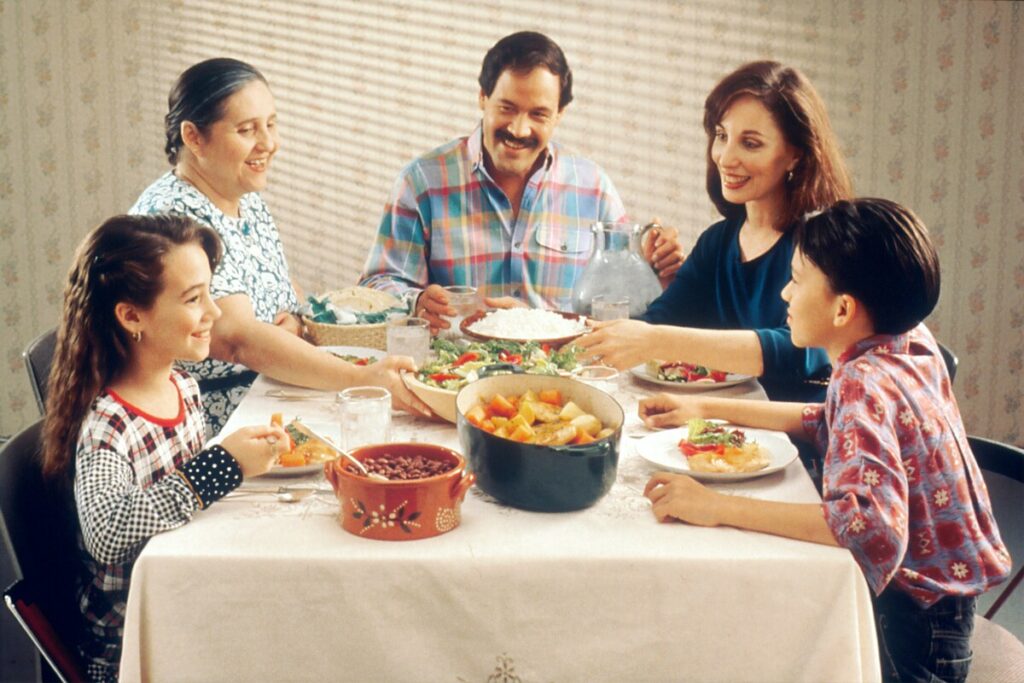
This breakdown fractures families, friendships, and neighborhoods. Marriages and lifelong relationships have ended over political differences. Parents and adult children barely speak. Churches, clubs, and volunteer organizations once served as neutral ground where people with different views worked together on shared problems. Increasingly, they self-segregate or splinter entirely.
The result is lonelier, more anxious lives. Mental health professionals report rising cases of political anxiety and depression linked to constant tribal conflict. Children absorb the lesson that loyalty to the team matters more than truth or kindness.
We have seen it in communities across this country: how tribal thinking turns neighbors into opponents and reasonable disagreements into personal vendettas. The human cost, lost relationships, diminished empathy and stunted personal growth, is not easily measured but is deeply felt by anyone paying attention.
Institutional Decay and the Death of Competence
Tribalism rewards loyalty over excellence. We see it in government, where qualified experts are sidelined when they refuse to toe the party line. We see it in the media, where clicks and ratings incentivize outrage over nuance. We see it in academia and corporate boardrooms, where ideological purity tests crowd out rigorous debate and genuine merit.
The consequences are predictable: declining institutional performance, higher failure rates, and deepening public disillusionment. When agencies, universities, and companies prioritize tribal signaling over results, problems go unsolved, and scandals multiply. Public faith in elections, the rule of law, and expertise erodes further, creating a vicious cycle that is difficult to break once it gains momentum.
History offers a clear warning here. Societies this divided become vulnerable to those who promise simple tribal victories in place of the hard, unglamorous work of self-governance. The demagogue’s pitch is always the same: the problems are caused by the other tribe, and victory over that tribe is the solution. It has never been true, and the societies that have believed it have paid dearly for the belief.
The Hidden Emotional and Spiritual Toll

Beneath the headlines lies a deeper loss: our shared sense of dignity and hope. Tribalism convinces us that half the country is evil or stupid rather than composed of fellow Americans with different experiences and different priorities. It replaces curiosity with contempt and principled disagreement with dehumanization.
This mindset does not just harm the other side. It diminishes all of us. It crowds out joy, creativity, and the simple pleasures of living in a diverse, dynamic nation. It makes us smaller, more fearful, and less capable of the generosity and resilience that define the American character at its best.
A person living in a state of constant tribal vigilance, scanning every interaction for political threat, is not living fully. Neither is a community that has organized itself around a permanent suspicion of its neighbors.
The loneliness epidemic now documented across American society is not unrelated to this tribal fragmentation. Social isolation and political polarization have accelerated together over the same decades, and the research increasingly suggests they are not merely parallel trends but connected ones. When we stop trusting our neighbors, we stop knowing them. When we stop knowing them, we stop helping each other. The social fabric that holds communities together is woven from exactly the kinds of small, repeated interactions that tribalism makes feel dangerous or pointless.
The Path Back Is Worth Every Effort
The good news is that these costs are not inevitable. They are the result of choices we have made, and choices can be unmade. The return from tribalism begins with recognizing what we stand to regain: stronger communities, more responsive institutions, genuine prosperity, and the restored dignity of seeing one another as neighbors rather than enemies.
Revolutionary love, a fierce commitment to decency, truth-seeking, and common ground, is the antidote. Small, consistent acts matter more than grand gestures. Listening before labeling. Seeking out views that challenge our own. Supporting leaders who demonstrate the courage to compromise without abandoning principle. Modeling for our children that America’s strength has always come from bridging divides, not widening them.
None of this requires abandoning conviction. The greatest leaders in American history held their principles with passion and pursued them with determination. What distinguished them was their refusal to dehumanize those who disagreed.
Washington mediated between Hamilton and Jefferson rather than choosing a side and destroying the other. Lincoln called for malice toward none and charity for all at the very moment when he had the power and the popular support to demand vengeance. Their example is not a relic of a simpler time. It is a template for a harder one.
The moderate majority, larger than either extreme and exhausted by the theater that claims to speak for it, holds more power than it has been willing to exercise. That changes when enough of us decide to engage locally, support leaders who prioritize results over performance, and refuse to let outrage economies profit from our division. History has repeatedly shown that when ordinary citizens decide the current arrangement is no longer acceptable, it changes.
We can no longer afford the high cost of tribalism. The question is not whether we can afford to reject it. The question is whether we can afford not to. Our future, and our children’s, depends on the choices we make today.
Start Where You Are

The path back does not begin in Washington. It begins at the end of our driveways, in our schools, at our workplaces, and around our kitchen tables. It begins when we decide that the person across the political divide is still our neighbor, still our fellow American, and still worth understanding.
Host the block party. Volunteer at the food bank. Show up at the school board meeting. Have the difficult conversation with the family member you have been avoiding. These are not small acts. They are the building blocks of the social trust that institutions cannot manufacture, and algorithms cannot replace. They are, in the most literal sense, the work of democracy.
The high cost of tribalism is real and rising. But so is the number of Americans who have had enough of paying it. That quiet majority, once it decides to act, has always been the most powerful force in American life. It remains so today.