
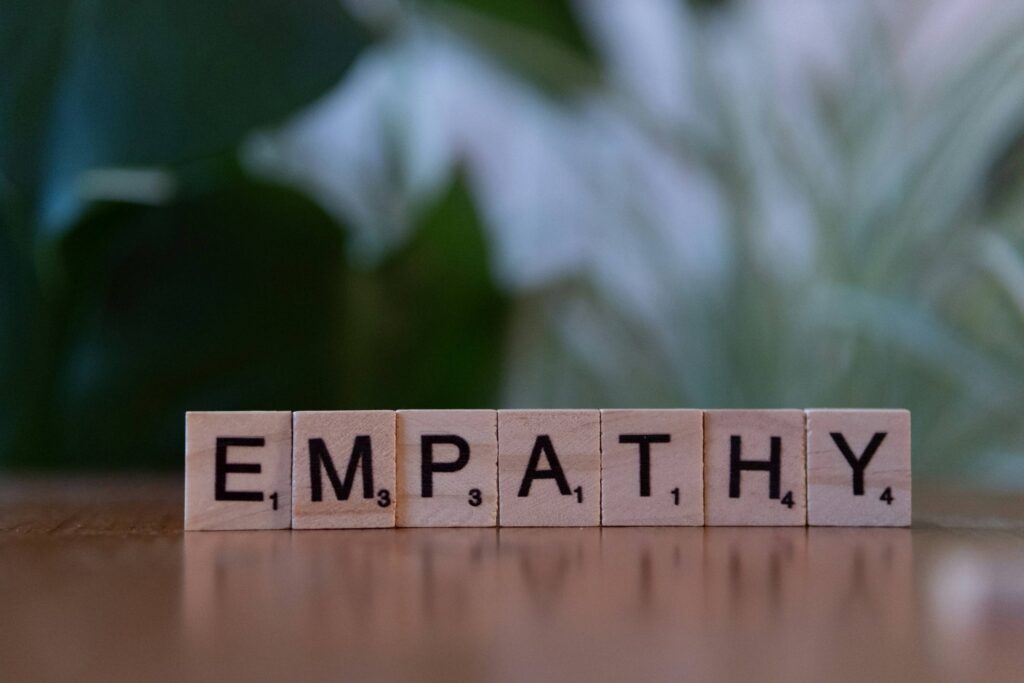

In the fractured landscape of modern America, cruelty has seeped into the everyday fabric of our lives like a slow poison. It is no longer confined to the shadows of history or the extremes of ideology; it is broadcast live on our screens, echoed in heated family dinners, and amplified through the echo chambers of social media.
Tribal politics, where loyalty to one’s “side” trumps all else, has turned neighbors into enemies, debates into demolitions, and compassion into a perceived weakness.
We have seen it in the vitriolic rhetoric of political leaders who mock the vulnerable, in online mobs that destroy lives over differing opinions, and in policies that prioritize punishment over understanding. But what if the antidote to this epidemic is not more division, but something far more revolutionary: radical empathy?
Radical empathy is not the soft, surface-level sympathy we often mistake it for. It is a bold, active choice to step into someone else’s world, to feel their pain, fears, and joys as if they were our own, even when that someone holds views that clash with everything we believe. It is treating our neighbors not as adversaries to be defeated, but as fellow humans deserving of dignity, just as we would want to be treated.
In a society dominated by zero-sum games, where winning means making the other side lose, radical empathy demands we rewrite the rules. It calls on ordinary, decent Americans to ignite a revival of decency, respect, and compassion that can transform our culture from the ground up. Through small, daily acts of kindness and understanding, we can combat the commonplace cruelty that is eroding our shared humanity.
How Far We Have Strayed
Consider how far we have strayed. In recent years, political discourse has devolved into a spectacle of cruelty. Leaders celebrate the suffering of immigrants at the border, framing family separations as necessary toughness rather than heartbreaking injustice. Social media platforms, designed to connect us, instead foster pile-ons where anonymity emboldens users to hurl insults that would never be said face-to-face.
A 2025 New York Times opinion piece captured this shift, with three writers examining what they described as the death of empathy in American politics, a climate where compassion is derided as weakness and strength is measured by how ruthlessly one can demean opponents.
Tribalism fuels this cycle: red versus blue, urban versus rural, us versus them. We have normalized cruelty as a tool for belonging, where mocking the “other” side bonds groups together. As Adam Serwer argued in his essay collection The Cruelty Is the Point, this is not accidental; cruelty functions as a binding agent that holds certain political coalitions intact, drawing from a long American history of exclusion and harm.
Tribal politics thrives on assumptions, reinforcing how prejudice and prejudgment shape our divisions and prevent meaningful dialogue.
The result is a society where everyday interactions are laced with suspicion, where road rage escalates into violence, and where children learn that empathy is a liability.
This is not who we are as Americans. As the massacre of empathy occurs, there is also undeniable collateral damage to basic human decency and common respect. Unfortunately, we have now arrived at a place where basic decency and treating fellow human beings with dignity and respect can no longer be taken for granted in our society. Change must happen. But how?
Stories That Prove Change Is Possible
Amid this darkness, stories of radical empathy shine like beacons, proving that change is possible.
Take Daryl Davis, a Black musician who has spent more than three decades befriending members of the Ku Klux Klan. Driven by a childhood question, “How can you hate me when you don’t even know me?” Davis sought out Klan leaders not to argue with or condemn them, but to listen and understand.
He attended rallies, shared meals, and engaged in honest conversations. Over time, his radical empathy pierced the armor of hate. Davis says he has been directly responsible for approximately 40 to 60 Klansmen leaving the organization, with an additional 200 or more departing indirectly through relationships and conversations he initiated.
One former Klan leader, Roger Kelly, the Imperial Wizard of the KKK in Maryland, eventually handed over his robe after years of friendship with Davis. Kelly even asked Davis to be his daughter’s godfather. Davis’s approach was never about excusing racism; it was about humanizing the dehumanizers, showing that empathy can dismantle even the most entrenched cruelty. His story reminds us that radical empathy requires courage, facing hate with openness rather than retaliation, and it works by revealing our common humanity.
The example set by Daryl Davis behooves us all to ask: How can we hate our neighbors whom we do not know?
Another powerful example comes from Megan Phelps-Roper, who grew up in the infamous Westboro Baptist Church, known for its hateful protests at funerals with signs like “God Hates Fags.” Indoctrinated from birth, Phelps-Roper was a vocal proponent of the church’s vitriol, running its X account and tweeting inflammatory messages daily. But on X, she encountered people who responded not with anger, but with curiosity and kindness.
One user, David Abitbol, a Jewish blogger who ran a site called Jewlicious, engaged her in thoughtful exchanges that challenged her views without attacking her personally. He pointed out contradictions in Westboro’s doctrine that she had never considered. Over time, his empathy and persistence cracked her certainty. She began to see the pain her words caused and the inconsistencies in her beliefs.
In November 2012, Phelps-Roper left the church along with her younger sister Grace, choosing a path of redemption and advocacy for dialogue. Today, she speaks and writes about how those acts of radical empathy saved her from a life of hate, emphasizing in her TED talk that “we can learn to successfully engage across ideological lines” by assuming good faith and listening deeply. Her transformation illustrates how empathy can bridge even the widest divides, turning enemies into allies and hate into healing.
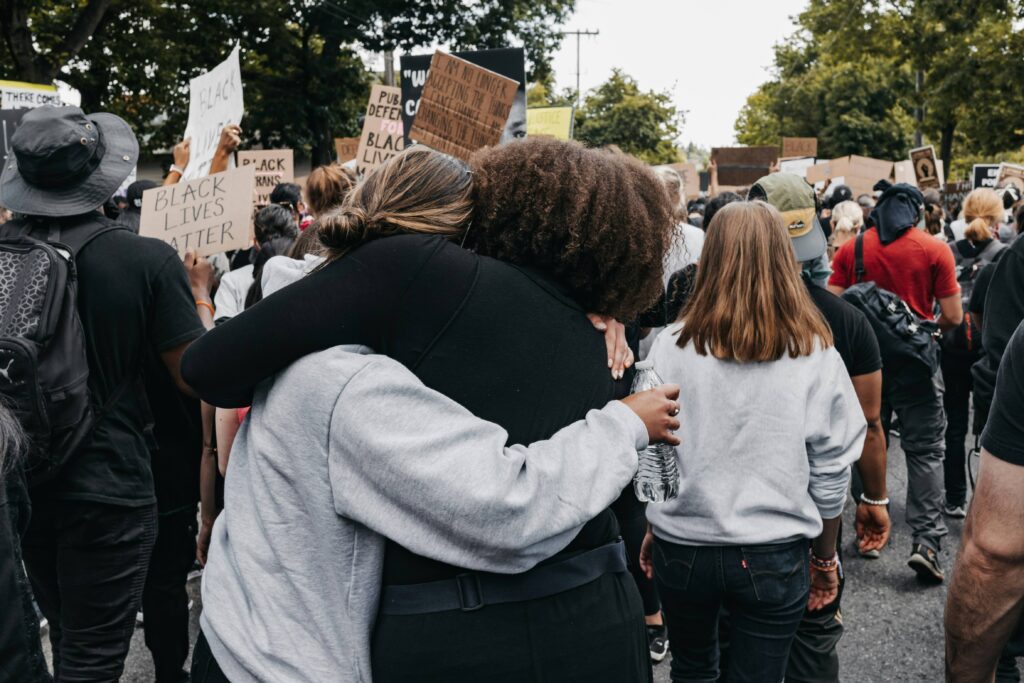
The Phelps-Roper example is just one of many illustrations of the truth of the powerful message delivered recently by Bad Bunny during his Super Bowl LX halftime show:
The only power greater than hate is love.
Empathy in Everyday Life
These are not isolated incidents; radical empathy thrives in everyday settings, as well. In a Minnesota classroom, second-grade teacher Qorsho Hassan, who was named the state’s Teacher of the Year for 2020-2021, witnessed a profound act of it when a student fell asleep on the reading carpet during math time. Instead of waking the child or ignoring the situation, the other students instinctively hushed their voices and solved problems in whispers to let their classmate rest. When the student woke up, the children joyously welcomed him back to their learning community. Hassan called it “the most brilliant display of radical empathy,” a spontaneous choice by children to prioritize compassion over routine.
This simple moment shows how young people, unburdened by tribal cynicism, naturally embody the empathy we adults often forget. It also highlights emerging initiatives, such as the American Empathy Project, organized by the American Humanist Association and scheduled for May 2026, which is allocating $100,000 to community service projects nationwide to counter cruelty with what the organizers call “defiant joy.”
By putting resources directly into acts of service, the project empowers ordinary people to help those targeted by divisive policies, demonstrating that empathy can be a powerful force against hate.
How We Cultivate Radical Empathy
So, how do we, as everyday Americans, cultivate this radical empathy in our own lives? It starts small, with intentional daily practices that rebuild our culture of compassion. We can begin by listening without interrupting. The next time a family member shares a political view we find objectionable, we can ask genuine questions: “What experiences led you to feel that way?” We can treat strangers with the kindness we would crave on a bad day: hold the door, offer a smile, or help a neighbor in need.
In online spaces, we can resist the urge to troll and respond with curiosity instead of condemnation. We can volunteer in our communities whether that means serving at a shelter, joining a diverse book club, or participating in interfaith dialogues. These acts are not naive; they are revolutionary. They honor the Golden Rule: treat others as we would want to be treated, recognizing that dignity is inherent, not earned.
The Ripple Effect of Choosing Empathy
The beauty of radical empathy is its ripple effect. When we extend it, we invite reciprocity, creating chains of kindness that erode cruelty’s hold. Research in psychology and neuroscience has consistently shown that empathy can be strengthened through deliberate practice, with training programs demonstrating measurable improvements in participants’ ability to understand and share others’ feelings.
Imagine an America where political debates focus on solutions rather than smears, where policies uplift rather than punish, and where children grow up seeing empathy as a strength rather than a weakness. This revival of decency is not a distant dream. It is happening in pockets across the nation, from community gardens in divided cities to bipartisan efforts on issues like mental health. By choosing empathy daily, we reclaim our shared values: respect for human dignity, compassion for those in need, and a belief that we are all in this together.
Ultimately, combating cruelty with radical empathy is not about erasing differences; it is about transcending them. It is a call to every ordinary, decent American to be the change our society desperately needs. Let us ignite that revival through one conversation, one act of kindness, one step into another’s shoes at a time.
The culture we build will be one of healing, not harm; of unity, not division. In that world, cruelty will not stand a chance. Because when we truly see each other, we cannot help but care. When we truly know each other, we cannot hate. That is the power of radical empathy, and it changes everything.