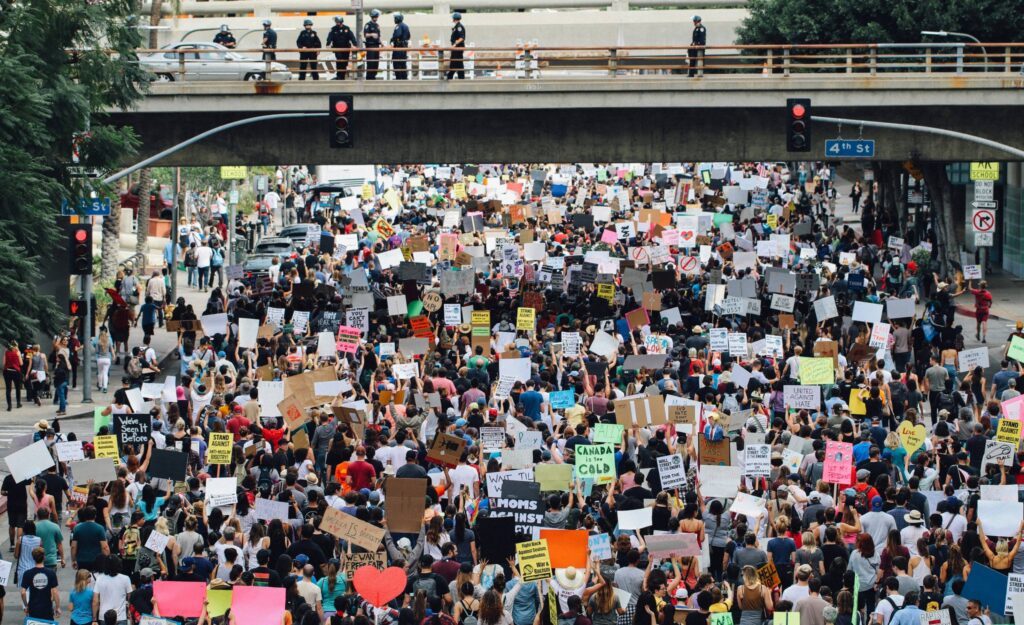

Two million people filled the streets of Manila in 1986. They faced tanks with prayers and flowers. No weapons. No violence. Just unity. Four days later, a dictator fled. Democracy returned. This is the power of mass peaceful protest.
Throughout history, nonviolent resistance has toppled empires, ended segregation, and restored freedom. It works when violence fails.
Why? Because peaceful protests can’t be easily defeated. Let’s explore why peaceful protests work through pivotal historical moments. We’ll discover how ordinary people achieved extraordinary change without firing a shot. The lessons from these movements matter more than ever today.
Why Peaceful Protests Work
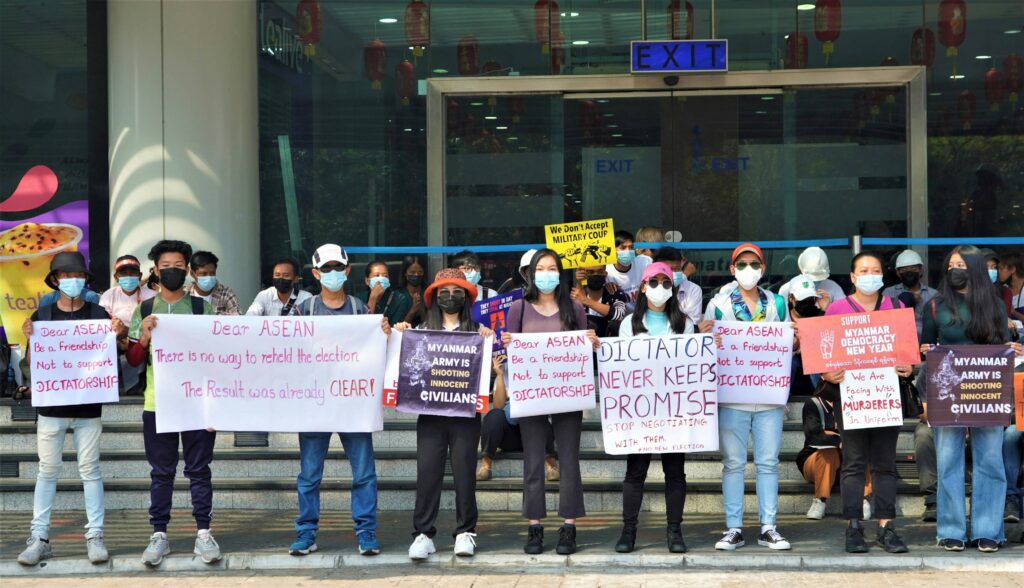
Nonviolent resistance draws from satyagraha, Gandhi’s concept of “truth force.” The idea is simple: truth and justice prevail when confronted peacefully with injustice.
Research backs this up. Nonviolent campaigns are twice as likely to succeed as violent ones. They achieve political change 53% of the time compared to just 26% for violent movements.
Why? Three reasons:
Peaceful protests attract broader coalitions. People who would never join violent uprisings participate in civil disobedience. Studies show that reaching just 3.5% of the population creates a tipping point for change.
Nonviolent resistance delegitimizes oppressive regimes. When authorities overreact with violence against peaceful protesters, public opinion turns against them. The contrast exposes injustice clearly.
The power of peaceful protest extends beyond immediate victories. These movements build solidarity, inspire policy changes, and create lasting societal shifts. Violence breeds cycles of retaliation. Peace builds foundations for democracy.
Now let’s examine the history of nonviolent resistance through movements that proved unstoppable.
Gandhi’s Salt March: Defying Empire with a Handful of Salt
British colonial law forbade Indians from producing or selling salt. A staple commodity. Controlled by a monopoly and sold at inflated prices. This symbolized broader economic exploitation.
March 12, 1930. Gandhi, age 61, began walking. Seventy-eight followers joined him on a 240-mile journey to the coastal village of Dandi. Over 24 days, thousands joined the procession. International media followed. April 6, 1930. Gandhi reached the beach. He bent down and picked up a lump of natural salt—one simple act of civil disobedience.
Millions across India began making salt. They boycotted British goods. They refused to pay taxes. The British arrested over 60,000 people, including Gandhi. Police beat peaceful demonstrators. But the nonviolent nature of the protest exposed colonial brutality to the world.
The Salt March succeeded because of its brilliant simplicity. Everyone could make salt. Suppression was logistically impossible. The mass peaceful protest turned everyday acts into a revolution. Its peacefulness won global sympathy. British resolve weakened. India gained independence in 1947. This successful peaceful protest in history sparked a global movement.
Montgomery Bus Boycott: Economic Power Through Unity
December 1, 1955. Rosa Parks refused to give up her bus seat to a white passenger in segregated Montgomery, Alabama. Her arrest ignited a movement. Dr. Martin Luther King Jr. led the newly formed Montgomery Improvement Association. Over 40,000 Black residents boycotted public buses for 381 days. They represented 90% of the city’s bus riders. They organized carpools. They walked miles. They endured threats, bombings, and arrests.
The economic impact was massive. The bus company lost thousands in revenue daily. Near bankruptcy loomed—legal challenges wound through courts. The U.S. Supreme Court eventually declared bus segregation unconstitutional.
This victory integrated Montgomery’s buses and ignited the broader Civil Rights Movement. It inspired sit-ins and freedom rides. It showed why peaceful protests work: economic leverage combined with moral authority outlasts repression.
The boycott’s resilience came from community organization and unwavering nonviolence. When King’s home was bombed, protesters maintained peace. This moral superiority swayed public opinion and forced federal intervention.
March on Washington: A Dream that Changed a Nation
August 28, 1963. Over 250,000 people—Black and white—filled the National Mall—the largest demonstration in American history at that time. Organized by A. Philip Randolph and Bayard Rustin, this mass, peaceful protest demanded an end to employment discrimination, educational equality, housing fairness, and the protection of voting rights.
At the Lincoln Memorial, Dr. King delivered his “I Have a Dream” speech. He envisioned a nation where his children would be judged by character, not color. Despite fears of violence, the event remained completely peaceful. Participants sang freedom songs. They held signs. They demonstrated discipline.
The march pressured President Kennedy to advance civil rights legislation. The Civil Rights Act of 1964 followed. It outlawed segregation in public places and employment discrimination.
Scale and discipline made it impossible to defeat. Authorities couldn’t justify cracking down on such a unified, nonthreatening crowd. Media coverage amplified the message nationwide. This is the power of peaceful protest: building irreversible momentum through unity and moral clarity.
The Singing Revolution: Culture as Weapon
Estonia lived under Soviet rule since 1940. Estonians preserved their identity through folk songs and festivals. Culture became resistant. In 1987, amid Gorbachev’s glasnost reforms, spontaneous gatherings began. People sang patriotic songs banned by the regime. These grew into massive demonstrations.
Up to 300,000 people assembled in Tallinn’s Song Festival Grounds. Nearly a quarter of Estonia’s population. They waved forbidden flags. They demanded independence. They sang. In 1988, over 100,000 participants joined a five-night protest. Estonia restored its symbols. Latvia and Lithuania joined the movement. By 1991, all three nations gained independence.
This nonviolent resistance weaponized culture, not arms. Authorities couldn’t outlaw singing without alienating everyone. The movement’s joyous, inclusive nature drew international support. The crumbling Soviet Union had no answer for people united in song.
People Power Revolution: Prayers Against Tanks
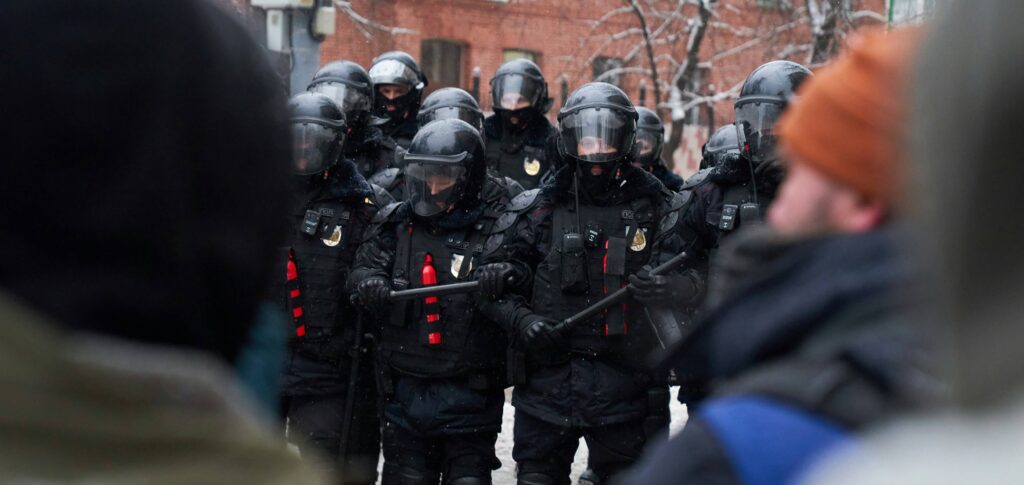
Philippines, 1986. President Ferdinand Marcos ruled through corruption and martial law. He rigged the election. Opposition leader Corazon Aquino called for civil disobedience.
February 22-25, 1986. Over two million Filipinos gathered along Epifanio de los Santos Avenue in Manila. Nuns, priests, and civilians formed human barricades. They prayed. They sang. They offered flowers to soldiers.
When tanks approached, protesters knelt in prayer. Soldiers faced a choice: fire on their own people or defect. Many soldiers refused to shoot. They joined the protesters instead. Marcos fled into exile. Aquino became president. Democracy returned in four days.
The EDSA Revolution succeeded by appealing to the humanity of the oppressors. It gained church and military sympathy. It neutralized force without confrontation. This is why peaceful protests work: they make violence morally impossible.
More Victories: A Pattern of Success
The history of nonviolent resistance reveals a consistent pattern. Cesar Chavez led Filipino and Mexican farmworkers in the Delano Grape Strike (1965-1970). Seventeen million Americans participated in a nationwide boycott. Despite grower violence, the movement secured union rights through sustained peaceful pressure.
Student-led demonstrations in Czechoslovakia’s Velvet Revolution (1989) grew to 500,000 people. Through strikes and theater performances, they toppled communism in weeks. No shots fired. Street protests in Tunisia during the Jasmine Revolution (2010-2011) sparked the Arab Spring. Dictator Ben Ali fled after decades in power. One successful peaceful protest ignited regional transformation.
These social movements endured because they built broad coalitions, exploited moral asymmetries, sustained creative pressure, and persisted through obstacles. Opponents can arrest leaders or disperse crowds. But ideas and unity persist, often spreading virally.
Why Mass Peaceful Protest Remains Undefeatable
Violence against peaceful protesters exposes brutality. It turns public opinion against oppressors. Nonviolent resistance welcomes everyone: young and old, people of different races, and people of various faiths. Unity amplifies power.
Boycotts hurt revenues. Strikes halt production. Demonstrations demand attention. This pressure persists when violence would invite a crackdown.
The power of peaceful protest extends beyond immediate victories. These movements create cultural shifts that outlast any single campaign. How do you stop people from singing? From walking? From refusing to buy? The simplicity and accessibility of civil disobedience make mass suppression logistically impossible.
Lessons for Today’s Movements
We face urgent challenges: climate crisis, inequality, and rising authoritarianism. The history of nonviolent resistance offers a roadmap.
Successful peaceful protests in history have brought diverse groups together around shared goals. Modern movements must do the same. Maintaining nonviolence, even when provoked, preserves moral authority. This discipline is non-negotiable.
Gandhi marched for 24 days. Montgomery boycotted for 381 days. Change takes time and sustained commitment. From salt-making to singing, effective social movements find innovative ways to resist. Think beyond marches. Every movement started small. Our community action contributes to larger change.
Conclusion: The Enduring Force for Good
From Gandhi’s march to Manila’s prayers, mass peaceful protests have rewritten history. These movements prove that collective nonviolence isn’t a weakness. It’s an unassailable strategy.
Why peaceful protests work:
- They build unstoppable momentum through unity.
- They maintain moral superiority that delegitimizes oppression.
- They create lasting change by building solidarity.
Today, we face challenges that demand this same courage and creativity.
Your turn: What injustice will you peacefully resist?
The power of peaceful protest belongs to everyone. We don’t need weapons or wealth—just conviction, community, and commitment to nonviolent resistance.
Share this post with someone who needs inspiration. Comment with a peaceful protest movement that inspires you. History shows that when people unite peacefully, no regime or injustice can easily defeat them. Let’s draw from these legacies and continue the fight for a better society—one peaceful step at a time.